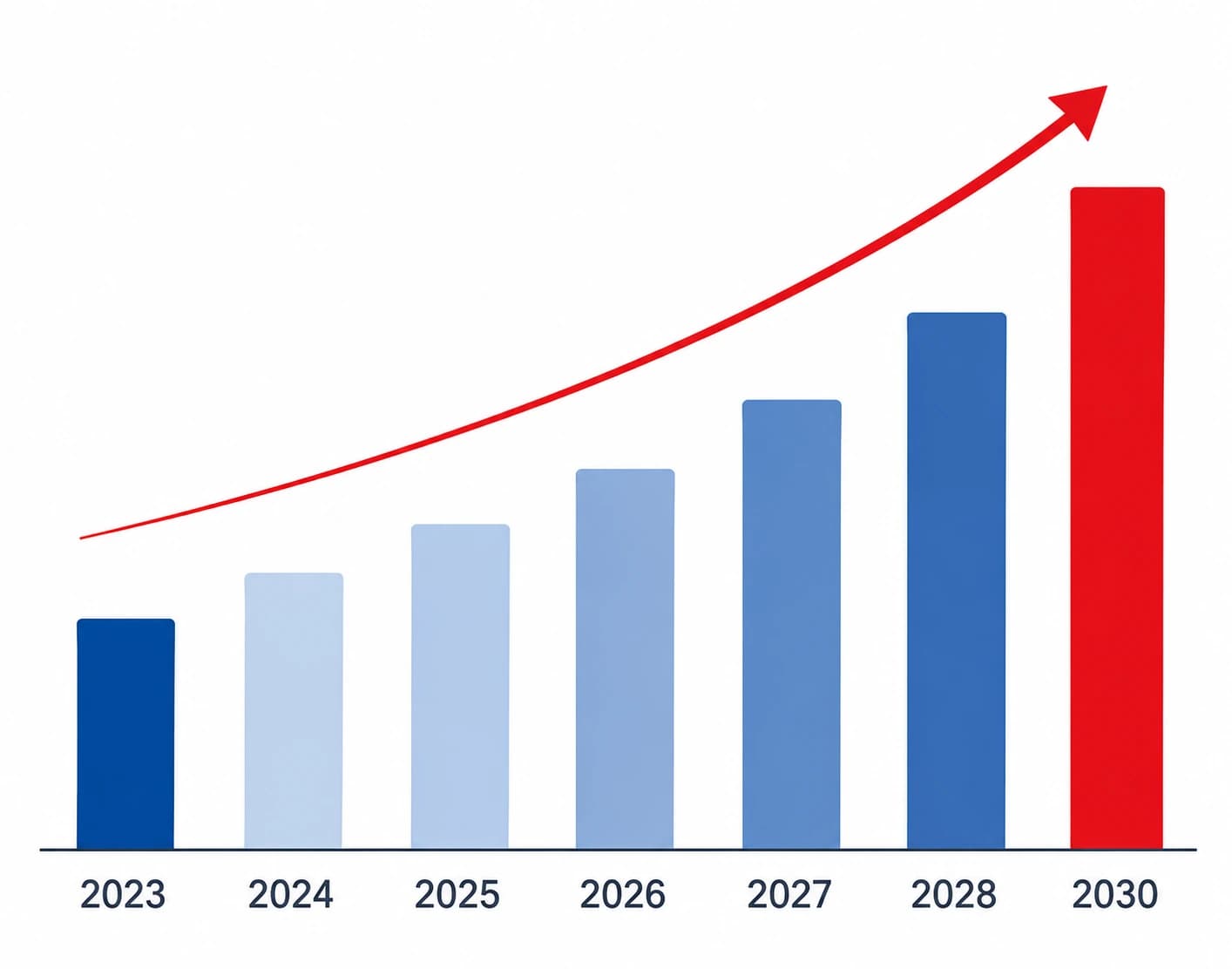
The global Heater Tube Deposit Rater market was valued at US$ 71.56 million in 2025 and is anticipated to reach US$ 113 million by 2032, witnessing a CAGR of 6.8% during the forecast period 2026-2032.
In 2025, global heater tube deposit rater production reached approximately 84 k units, the average price is 850 usd /unit. Heater tube deposit rater are used to measure the high temperature stability of turbine fuels. The thickness of the deposit is accurately determined by an automatic instrument, which reduces the subjectivity of the test.
Market Concentration and Key Players:
Internationally, the market concentration of heater tube depositors is relatively high, mainly concentrated in developed countries in Europe and America. For example, AD Systems and Petroleum Analyzer Co and other large manufacturers; from the domestic point of view, heater tube depositors still have a lot of room for development.
Manufacturing Processes and Market Trends:
Heater tube depositor is a precision instrument used to quantitatively measure the thickness of deposits formed on the surface of heating tubes by aviation turbine fuels. The core of its manufacturing process lies in the combination of standardized sample preparation and automatic optical measurement. First, the heating tube samples should be prepared according to ASTM D3241 and other standard specifications, and then placed in the instrument detection cavity. The key process involves using optical interference technology, that is, using light beams with specific wavelengths to irradiate the surface of heating tubes. The spectrometer analyzes the interference fringes formed by reflected light and calculates the deposit thickness according to the algorithm. The whole measurement process can scan 1200 points on the sample surface in about 15 minutes, generating quantitative data including average thickness, maximum thickness and deposit volume. At the same time, the instrument integrates touch screen control, data storage and LAN transmission functions to improve operation efficiency.
In terms of market trends, with the continuous improvement of fuel cleanliness and engine operation safety requirements in the global aviation industry, traditional subjective visual evaluation methods are being replaced by objective quantitative measurements at an accelerated pace, pushing this type of equipment to develop in a higher automation and intelligence direction, such as integrating three-dimensional deposition views and automatic conformity determination functions, and its application scope extends from refining research and development to pipeline monitoring and mobile laboratories. Future market growth will be closely linked to the deepening of aviation emission reduction regulations and the improvement of fuel quality standards, resulting in continuous optimization of equipment in terms of measurement accuracy, data interconnection and compliance with multiple international standards.
This report aims to provide a comprehensive presentation of the global market for Heater Tube Deposit Rater, with both quantitative and qualitative analysis, to help readers develop business/growth strategies, assess the market competitive situation, analyze their position in the current marketplace, and make informed business decisions regarding Heater Tube Deposit Rater.
The Heater Tube Deposit Rater market size, estimations, and forecasts are provided in terms of sales quantity (K Units) and revenue ($ millions), considering 2025 as the base year, with history and forecast data for the period from 2021 to 2032. This report segments the global Heater Tube Deposit Rater market comprehensively. Regional market sizes, concerning products by Automation, by Application, and by players, are also provided.
For a more in-depth understanding of the market, the report provides profiles of the competitive landscape, key competitors, and their respective market ranks. The report also discusses technological trends and new product developments.
The report will help the Heater Tube Deposit Rater manufacturers, new entrants, and industry chain related companies in this market with information on the revenues, sales, and average price for the overall market and the sub-segments across the different segments, by company, by Automation, by Application, and by regions.
Chapter 1: Introduces the report scope of the report, executive summary of different market segments (by region, product type, application, etc), including the market size of each market segment, future development potential, and so on. It offers a high-level view of the current state of the market and its likely evolution in the short to mid-term, and long term.
Chapter 2: key insights, key emerging trends, etc.
Chapter 3: Manufacturers competitive analysis, detailed analysis of Heater Tube Deposit Rater manufacturers competitive landscape, price, sales and revenue market share, latest development plan, merger, and acquisition information, etc.
Chapter 4: Provides profiles of key players, introducing the basic situation of the main companies in the market in detail, including product sales, revenue, price, gross margin, product introduction, recent development, etc.
Chapter 5 & 6: Sales, revenue of Heater Tube Deposit Rater in regional level and country level. It provides a quantitative analysis of the market size and development potential of each region and its main countries and introduces the market development, future development prospects, market space, and market size of each country in the world.
Chapter 7: Provides the analysis of various market segments by Automation, covering the market size and development potential of each market segment, to help readers find the blue ocean market in different market segments.
Chapter 8: Provides the analysis of various market segments by Application, covering the market size and development potential of each market segment, to help readers find the blue ocean market in different downstream markets.
Chapter 9: Analysis of industrial chain, including the upstream and downstream of the industry.
Chapter 10: The main points and conclusions of the report.
- ★ What Is The Overall Market Size And Projected Growth Rate Across Global And Regional Segments?
- ★ How Does The Market Size And Growth Outlook Vary Across Major Countries?
- ★ Which Region Or Market Sub-Segment Is Anticipated To Dominate Growth During The Forecast Period?
- ★ What Are The Primary Factors Expected To Drive Market Expansion, And What Challenges May Restrain Growth?
- ★ Which Emerging Technologies And Market Trends Are Shaping The Future Landscape?
- ★ What Are The Most Significant Opportunities Available In The Market?
- ★ Who Are The Leading Manufacturers Actively Participating In The Global Market?
- ★ Which Company Currently Holds The Largest Share Of The Market?
- ★ What Are The Potential Growth Avenues For New Entrants In The Global Market?