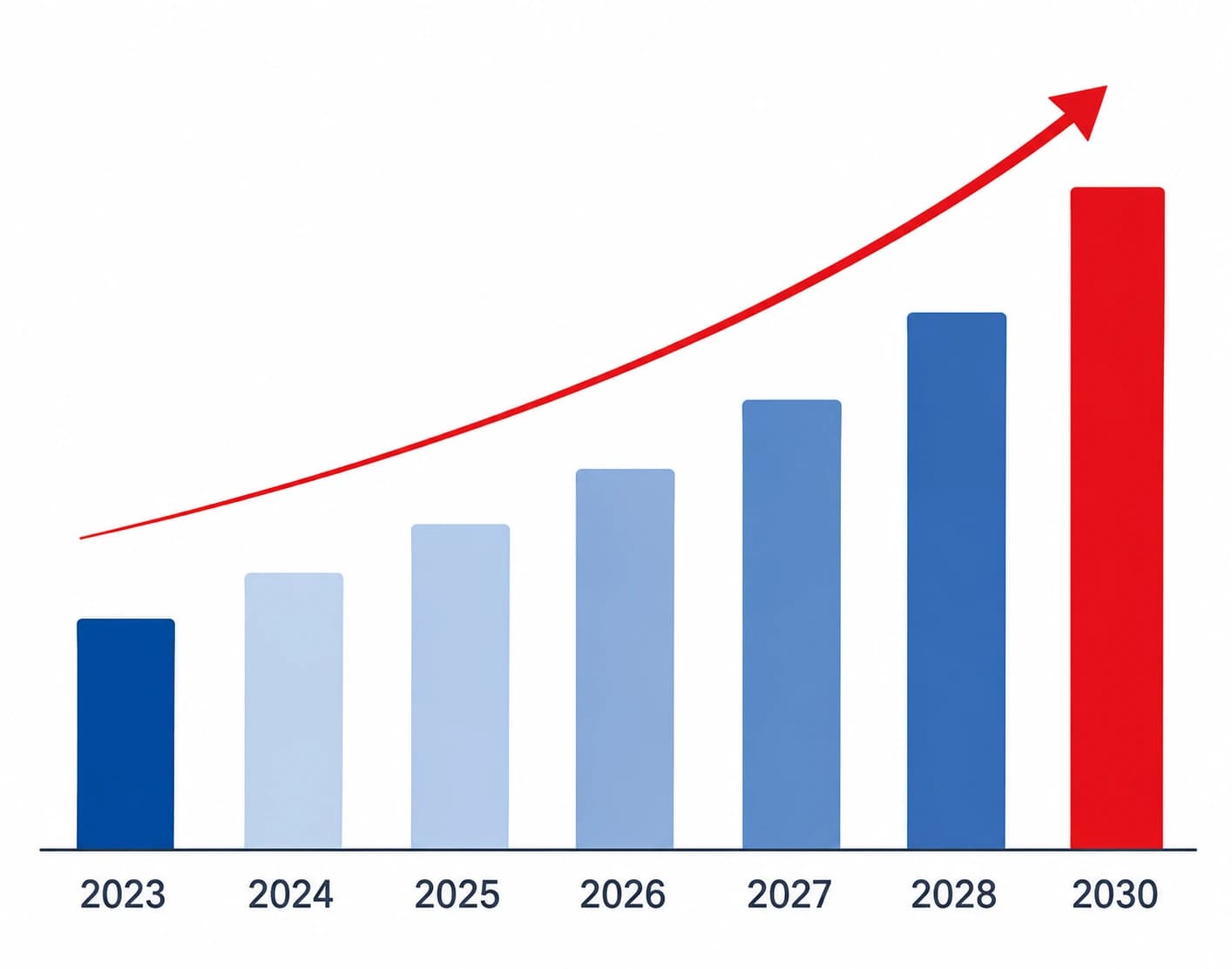
The global Reverse Osmosis Films market was valued at US$ 1855 million in 2024 and is anticipated to reach US$ 2613 million by 2031, witnessing a CAGR of 5.1% during the forecast period 2025-2031.
Reverse Osmosis films refer to the semipermeable polyamide thin-film layers used in the construction of RO membranes. These films are typically part of Thin Film Composite (TFC) structures and are responsible for the selective separation of water molecules from dissolved salts, minerals, and impurities in the RO process.
The Reverse Osmosis Films Market is set for steady growth due to increasing demand for clean water, efficiency in RO operations, and regulatory pressures on wastewater discharge. As film quality directly determines RO membrane performance, innovation in film material science is crucial. Companies that focus on developing durable, high-rejection, and low-energy films—and that support custom solutions for varied water sources—will maintain a competitive edge in this evolving market.
High-Performance Film Innovations: Development of low-fouling, anti-biofouling, and chlorine-tolerant films for extended membrane life and lower OPEX. Shift Toward Energy-Efficient Systems: Demand for RO films that perform efficiently at lower pressures, especially in residential and brackish water applications. Customization for Targeted Applications: OEMs are integrating specialized RO films for seawater, industrial, and wastewater treatment. Sustainable Materials and Green Chemistry: Research into eco-friendly polymers and greener manufacturing processes for RO films. Integration into Smart Membranes: Development of films with surface modifications, nanomaterials, or coatings that allow self-cleaning or fouling resistance.
Rising Global Water Scarcity: Drives demand for water purification systems utilizing RO technologies. Boom in Residential & Commercial Water Purifiers: Fuels demand for compact, efficient RO films. Industrial Wastewater Regulations: Enforcing stricter effluent standards globally, necessitating advanced filtration films. Desalination Projects: Massive investments in SWRO plants, especially in the Middle East and Asia-Pacific. Growing Replacement & Retrofit Market: Aging membrane systems are being upgraded with improved RO films.
This report aims to provide a comprehensive presentation of the global market for Reverse Osmosis Films, with both quantitative and qualitative analysis, to help readers develop business/growth strategies, assess the market competitive situation, analyze their position in the current marketplace, and make informed business decisions regarding Reverse Osmosis Films.
The Reverse Osmosis Films market size, estimations, and forecasts are provided in terms of sales quantity (K Sqm) and revenue ($ millions), considering 2024 as the base year, with history and forecast data for the period from 2020 to 2031. This report segments the global Reverse Osmosis Films market comprehensively. Regional market sizes, concerning products by Type, by Application, and by players, are also provided.
For a more in-depth understanding of the market, the report provides profiles of the competitive landscape, key competitors, and their respective market ranks. The report also discusses technological trends and new product developments.
The report will help the Reverse Osmosis Films manufacturers, new entrants, and industry chain related companies in this market with information on the revenues, sales, and average price for the overall market and the sub-segments across the different segments, by company, by Type, by Application, and by regions.
Chapter 1: Introduces the report scope of the report, executive summary of different market segments (by region, product type, application, etc), including the market size of each market segment, future development potential, and so on. It offers a high-level view of the current state of the market and its likely evolution in the short to mid-term, and long term.
Chapter 2: key insights, key emerging trends, etc.
Chapter 3: Manufacturers competitive analysis, detailed analysis of Reverse Osmosis Films manufacturers competitive landscape, price, sales and revenue market share, latest development plan, merger, and acquisition information, etc.
Chapter 4: Provides profiles of key players, introducing the basic situation of the main companies in the market in detail, including product sales, revenue, price, gross margin, product introduction, recent development, etc.
Chapter 5 & 6: Sales, revenue of Reverse Osmosis Films in regional level and country level. It provides a quantitative analysis of the market size and development potential of each region and its main countries and introduces the market development, future development prospects, market space, and market size of each country in the world.
Chapter 7: Provides the analysis of various market segments by Type, covering the market size and development potential of each market segment, to help readers find the blue ocean market in different market segments.
Chapter 8: Provides the analysis of various market segments by Application, covering the market size and development potential of each market segment, to help readers find the blue ocean market in different downstream markets.
Chapter 9: Analysis of industrial chain, including the upstream and downstream of the industry.
Chapter 10: The main points and conclusions of the report.
- ★ What Is The Overall Market Size And Projected Growth Rate Across Global And Regional Segments?
- ★ How Does The Market Size And Growth Outlook Vary Across Major Countries?
- ★ Which Region Or Market Sub-Segment Is Anticipated To Dominate Growth During The Forecast Period?
- ★ What Are The Primary Factors Expected To Drive Market Expansion, And What Challenges May Restrain Growth?
- ★ Which Emerging Technologies And Market Trends Are Shaping The Future Landscape?
- ★ What Are The Most Significant Opportunities Available In The Market?
- ★ Who Are The Leading Manufacturers Actively Participating In The Global Market?
- ★ Which Company Currently Holds The Largest Share Of The Market?
- ★ What Are The Potential Growth Avenues For New Entrants In The Global Market?