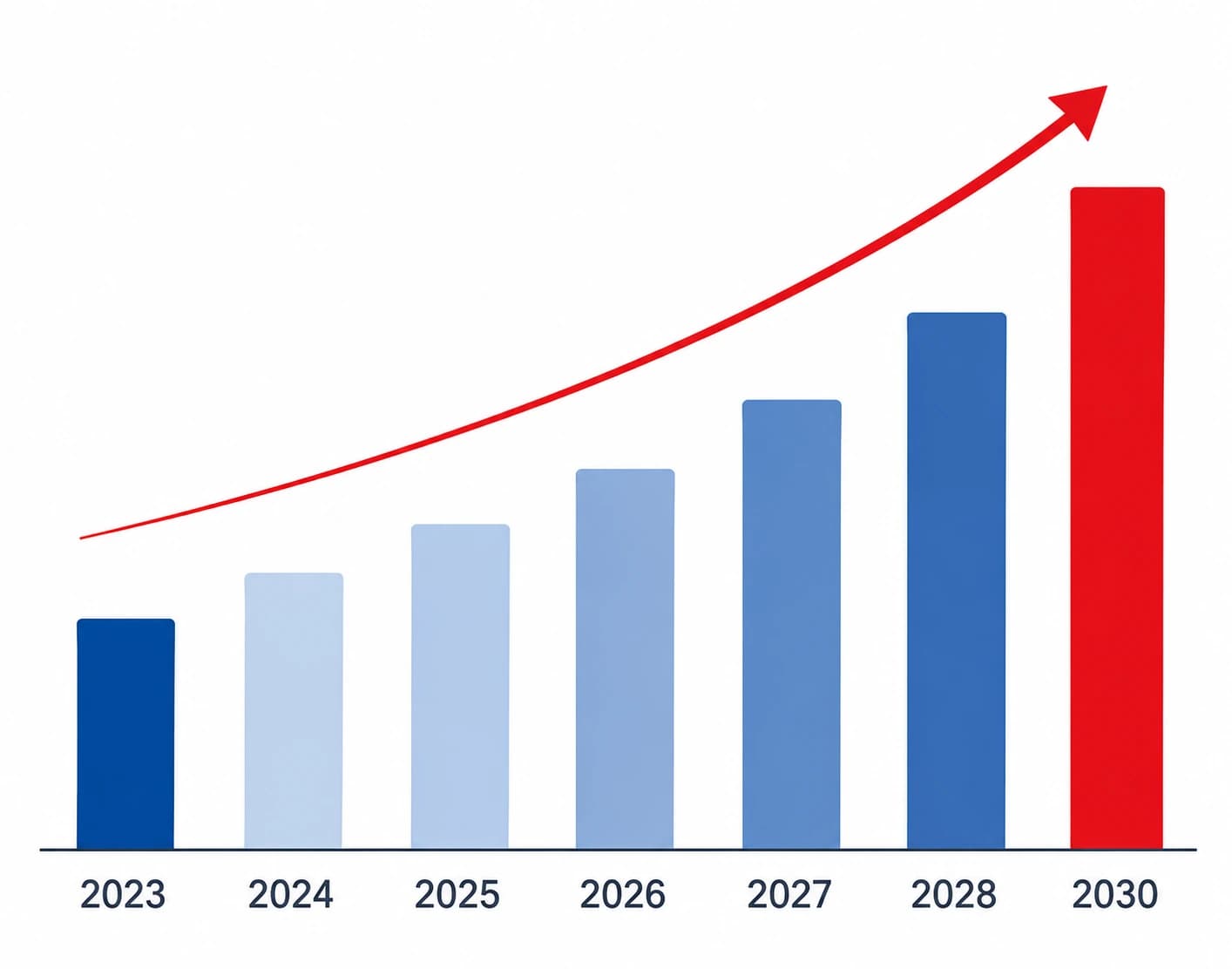
The global market for Nondestructive Corrosion Testing Technology was estimated to be worth US$ 105 million in 2024 and is forecast to a readjusted size of US$ 179 million by 2031 with a CAGR of 7.0% during the forecast period 2025-2031.
Nondestructive corrosion detection technology refers to a collection of technologies that quantify the degree of corrosion damage, locate defects, and evaluate the remaining life of materials through physical, chemical, or digital means without destroying or damaging the inspected object (such as metal structures, composite materials, concrete, etc.). Its core goal is to detect corrosion hazards early, optimize maintenance decisions, extend the service life of equipment, and reduce the cost of the entire life cycle.The industry average gross profit margin is approximately 18-28%.
The core drivers of the non-destructive corrosion testing (NDT) market include the following:
Technological progress and innovation drive market upgrades
Continuous innovation in NDT technology is the core driver of market development. Traditional technologies such as ultrasonic testing, eddy current testing, and radiographic testing are continuously being optimized, significantly improving detection accuracy and efficiency. At the same time, emerging technologies such as the Internet of Things, big data, and artificial intelligence are deeply integrated with NDT, driving the development of intelligent and automated equipment. Furthermore, the application of new testing technologies such as electrochemical noise analysis and AC impedance spectroscopy further expands the applicability of NDT in complex environments, meeting the industrial demand for high-precision and high-efficiency testing.
Industrial safety and maintenance requirements are driving market growth.
The global industrial sector's emphasis on equipment safety and operational efficiency is directly driving the growth of the NDT market. In key industries such as oil and gas, chemicals, and power generation, corrosion is a major factor in equipment failure, potentially leading to safety incidents or production disruptions. By using NDT to monitor equipment corrosion in real time, companies can optimize maintenance plans, extend equipment life, and reduce operating costs. Furthermore, stricter policies regarding industrial facility safety, such as China's support for green transformation under its "dual carbon" goals, have further accelerated the adoption of nondestructive testing technology.
Policy support and improved industry standards ensure market regulation
The improvement of government policies and industry standards has provided support for the development of the nondestructive corrosion testing market. The "Guidelines for the Development of Industrial Safety Monitoring Technology" issued by the National Development and Reform Commission clearly stipulates that the online corrosion monitoring coverage rate in key industries must be increased to 60% by 2026, accelerating the development of a technical standards system. Furthermore, stricter environmental regulations are driving companies to adopt low-power, high-precision testing equipment.
This report aims to provide a comprehensive presentation of the global market for Nondestructive Corrosion Testing Technology, focusing on the total sales revenue, key companies market share and ranking, together with an analysis of Nondestructive Corrosion Testing Technology by region & country, by Type, and by Application.
The Nondestructive Corrosion Testing Technology market size, estimations, and forecasts are provided in terms of sales revenue ($ millions), considering 2024 as the base year, with history and forecast data for the period from 2020 to 2031. With both quantitative and qualitative analysis, to help readers develop business/growth strategies, assess the market competitive situation, analyze their position in the current marketplace, and make informed business decisions regarding Nondestructive Corrosion Testing Technology.
Chapter 1: Introduces the report scope of the report, global total market size. This chapter also provides the market dynamics, latest developments of the market, the driving factors and restrictive factors of the market, the challenges and risks faced by manufacturers in the industry, and the analysis of relevant policies in the industry.
Chapter 2: Detailed analysis of Nondestructive Corrosion Testing Technology company competitive landscape, revenue market share, latest development plan, merger, and acquisition information, etc.
Chapter 3: Provides the analysis of various market segments by Type, covering the market size and development potential of each market segment, to help readers find the blue ocean market in different market segments.
Chapter 4: Provides the analysis of various market segments by Application, covering the market size and development potential of each market segment, to help readers find the blue ocean market in different downstream markets.
Chapter 5: Revenue of Nondestructive Corrosion Testing Technology in regional level. It provides a quantitative analysis of the market size and development potential of each region and introduces the market development, future development prospects, market space, and market size of each country in the world.
Chapter 6: Revenue of Nondestructive Corrosion Testing Technology in country level. It provides sigmate data by Type, and by Application for each country/region.
Chapter 7: Provides profiles of key players, introducing the basic situation of the main companies in the market in detail, including product revenue, gross margin, product introduction, recent development, etc.
Chapter 8: Analysis of industrial chain, including the upstream and downstream of the industry.
- ★ What Is The Overall Market Size And Projected Growth Rate Across Global And Regional Segments?
- ★ How Does The Market Size And Growth Outlook Vary Across Major Countries?
- ★ Which Region Or Market Sub-Segment Is Anticipated To Dominate Growth During The Forecast Period?
- ★ What Are The Primary Factors Expected To Drive Market Expansion, And What Challenges May Restrain Growth?
- ★ Which Emerging Technologies And Market Trends Are Shaping The Future Landscape?
- ★ What Are The Most Significant Opportunities Available In The Market?
- ★ Who Are The Leading Manufacturers Actively Participating In The Global Market?
- ★ Which Company Currently Holds The Largest Share Of The Market?
- ★ What Are The Potential Growth Avenues For New Entrants In The Global Market?