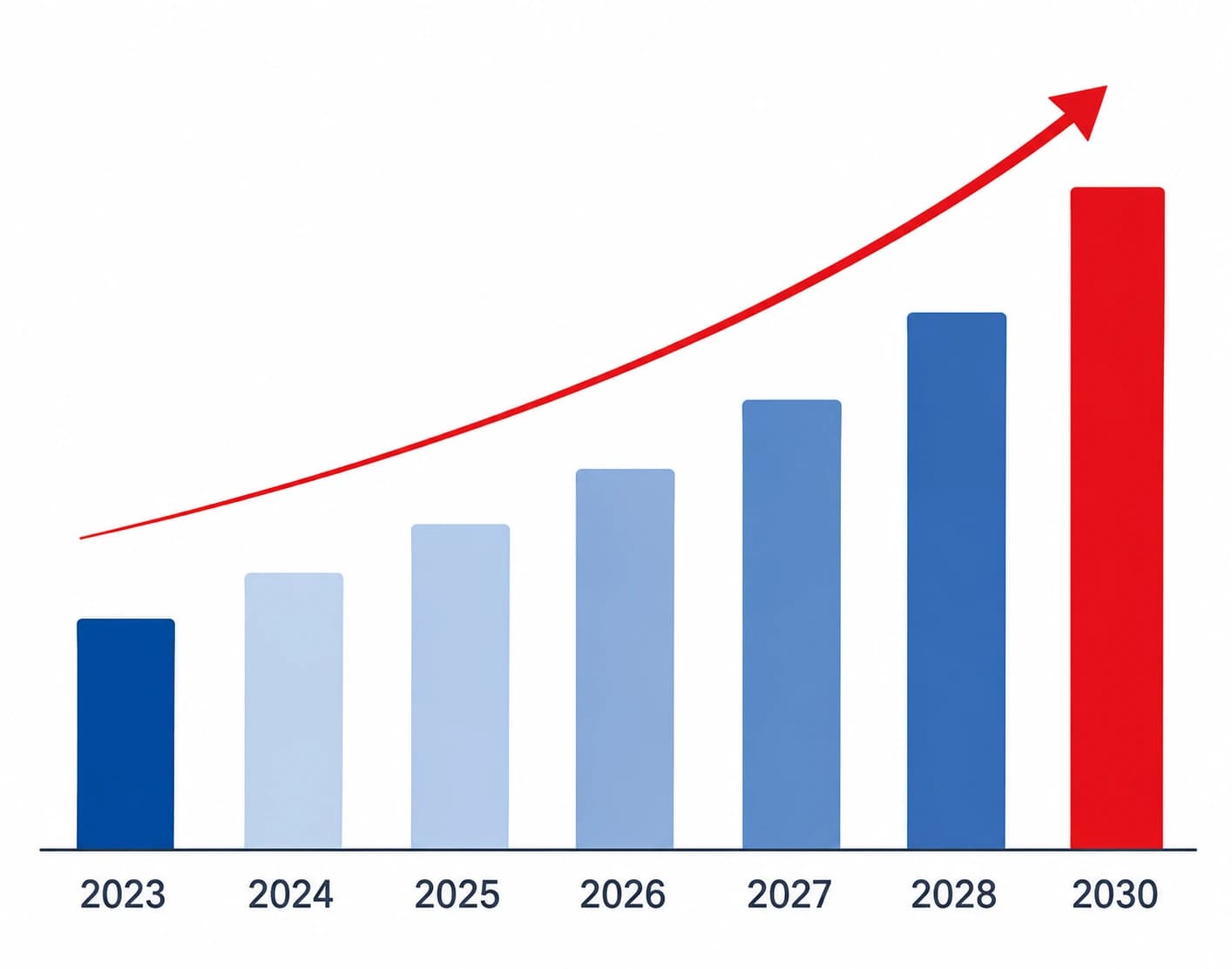
The global AI OWS Earphones (Artificial Intelligence OWS Earphones) market was valued at US$ 152 million in 2025 and is anticipated to reach US$ 566 million by 2032, witnessing a CAGR of 21.0% during the forecast period 2026-2032.
In 2024, global production of AI OWS earphones reached 119,900 units, and is projected to reach 1,068,900 units in 2025, with an average selling price of $142 per pair. AI earphones typically employ a true wireless stereo (TWS) design, connecting to mobile devices via Bluetooth for a seamless user experience. Furthermore, these earphones feature touch controls, active noise cancellation, and ambient sound modes to meet user needs in various scenarios. With continuous technological advancements and increasing market demand, the AI earphone industry is rapidly developing, becoming an important part of the consumer electronics market. Unlike the mainstream approach of focusing on sound quality or noise cancellation, AI earphones are not merely passive music playback tools, but intelligent tools capable of actively understanding context, translating, transcribing notes, and even monitoring health. Compared to the traditional TWS earphones primarily focused on music playback, the new generation of AI earphones is evolving from "auxiliary devices" to "intelligent terminals," becoming a carrier connecting voice assistants, large-scale model services, and various sensory interactions. They provide lightweight intelligent services in scenarios such as sports, work, and daily life. Secondly, in AI design, open-back headphones, previously considered products prioritizing comfort over sound quality, have now become a crucial hardware form for realizing AI headphone functionality. On one hand, they offer more structural space to accommodate sensors, NPU chips, and low-power WiFi modules; on the other hand, their "all-day wear + low-intrusion" attributes make them naturally suitable as an entry point for AI services. Compared to in-ear headphones, semi-in-ear headphones reduce pressure on the ear canal and alleviate discomfort from prolonged wear, making them more popular with users. Open-back AI smart headphones, with their unique design and functional advantages, will occupy a more important position in the future market. The upstream of the AI OWS Earphones industry chain involves raw material supply and technology research and development, mainly including Bluetooth, memory chips, sensors, and voice recognition technology; companies involved include Hengxuan Technology (Shanghai) Co., Ltd., Actions Semiconductor Design Co., Ltd., and Wuhan Lanxun Technology Co., Ltd. The midstream of the industry chain involves manufacturing and assembly, mainly including component processing and manufacturing, complete machine assembly, and software development; the downstream of the industry chain involves sales and application.
Market Trends: In recent years, with the rapid development and widespread application of artificial intelligence (AI) technology, smart headphones have gradually evolved from traditional audio playback devices into high-tech products integrating diverse intelligent functions such as voice interaction, intelligent noise reduction, health monitoring, and personalized recommendations. AI headphones, as a highly representative category of smart wearable devices in the field of artificial intelligence, are entering a period of rapid development. In the future, AI headphones will be deeply integrated into fields such as the metaverse, healthcare, and education, monitoring health indicators and providing risk warnings in healthcare, and customizing learning plans in education. Currently, two types of companies are rapidly converging on this new track: one is AI model platform companies such as ByteDance, Baidu, and iFlytek, attempting to enter the C-end market through headphones and bind user habits. The other is smart terminal manufacturers such as Xiaomi, Huawei, and Honor, incorporating AI headphones into their ecosystems and expanding service scenarios through hardware and software integration. Sports and health functions are also becoming an increasingly important part of AI headphones. Taking the ARC5 as an example, some versions have added blood oxygen detection (CFDA certified) and hearing aid functions, enabling voice feedback and data recording during exercise. Huawei, Honor, and other manufacturers are also using their headphones as an extension of health monitoring, forming a powerful synergy with fitness trackers and smartwatches. Driving forces: On the one hand, the continuously decreasing cost of large-scale model integration provides hardware manufacturers with room to lower prices; on the other hand, many new brands are choosing to enter the market with a low-price strategy, sacrificing profit per unit for user scale and entry-level value. The internet-driven approach of "low-priced hardware + value-added services" is propelling AI headphones from a "technological luxury" to "ubiquitous smart hardware."
This report aims to provide a comprehensive presentation of the global market for AI OWS Earphones (Artificial Intelligence OWS Earphones), with both quantitative and qualitative analysis, to help readers develop business/growth strategies, assess the market competitive situation, analyze their position in the current marketplace, and make informed business decisions regarding AI OWS Earphones (Artificial Intelligence OWS Earphones).
The AI OWS Earphones (Artificial Intelligence OWS Earphones) market size, estimations, and forecasts are provided in terms of sales quantity (K Units) and revenue ($ millions), considering 2025 as the base year, with history and forecast data for the period from 2021 to 2032. This report segments the global AI OWS Earphones (Artificial Intelligence OWS Earphones) market comprehensively. Regional market sizes, concerning products by Type, by Sales Channel, and by players, are also provided.
For a more in-depth understanding of the market, the report provides profiles of the competitive landscape, key competitors, and their respective market ranks. The report also discusses technological trends and new product developments.
The report will help the AI OWS Earphones (Artificial Intelligence OWS Earphones) manufacturers, new entrants, and industry chain related companies in this market with information on the revenues, sales, and average price for the overall market and the sub-segments across the different segments, by company, by Type, by Sales Channel, and by regions.
Chapter 1: Introduces the report scope of the report, executive summary of different market segments (by region, product type, application, etc), including the market size of each market segment, future development potential, and so on. It offers a high-level view of the current state of the market and its likely evolution in the short to mid-term, and long term.
Chapter 2: key insights, key emerging trends, etc.
Chapter 3: Manufacturers competitive analysis, detailed analysis of AI OWS Earphones (Artificial Intelligence OWS Earphones) manufacturers competitive landscape, price, sales and revenue market share, latest development plan, merger, and acquisition information, etc.
Chapter 4: Provides profiles of key players, introducing the basic situation of the main companies in the market in detail, including product sales, revenue, price, gross margin, product introduction, recent development, etc.
Chapter 5 & 6: Sales, revenue of AI OWS Earphones (Artificial Intelligence OWS Earphones) in regional level and country level. It provides a quantitative analysis of the market size and development potential of each region and its main countries and introduces the market development, future development prospects, market space, and market size of each country in the world.
Chapter 7: Provides the analysis of various market segments by Type, covering the market size and development potential of each market segment, to help readers find the blue ocean market in different market segments.
Chapter 8: Provides the analysis of various market segments by Sales Channel, covering the market size and development potential of each market segment, to help readers find the blue ocean market in different downstream markets.
Chapter 9: Analysis of industrial chain, including the upstream and downstream of the industry.
Chapter 10: The main points and conclusions of the report.
- ★ What Is The Overall Market Size And Projected Growth Rate Across Global And Regional Segments?
- ★ How Does The Market Size And Growth Outlook Vary Across Major Countries?
- ★ Which Region Or Market Sub-Segment Is Anticipated To Dominate Growth During The Forecast Period?
- ★ What Are The Primary Factors Expected To Drive Market Expansion, And What Challenges May Restrain Growth?
- ★ Which Emerging Technologies And Market Trends Are Shaping The Future Landscape?
- ★ What Are The Most Significant Opportunities Available In The Market?
- ★ Who Are The Leading Manufacturers Actively Participating In The Global Market?
- ★ Which Company Currently Holds The Largest Share Of The Market?
- ★ What Are The Potential Growth Avenues For New Entrants In The Global Market?