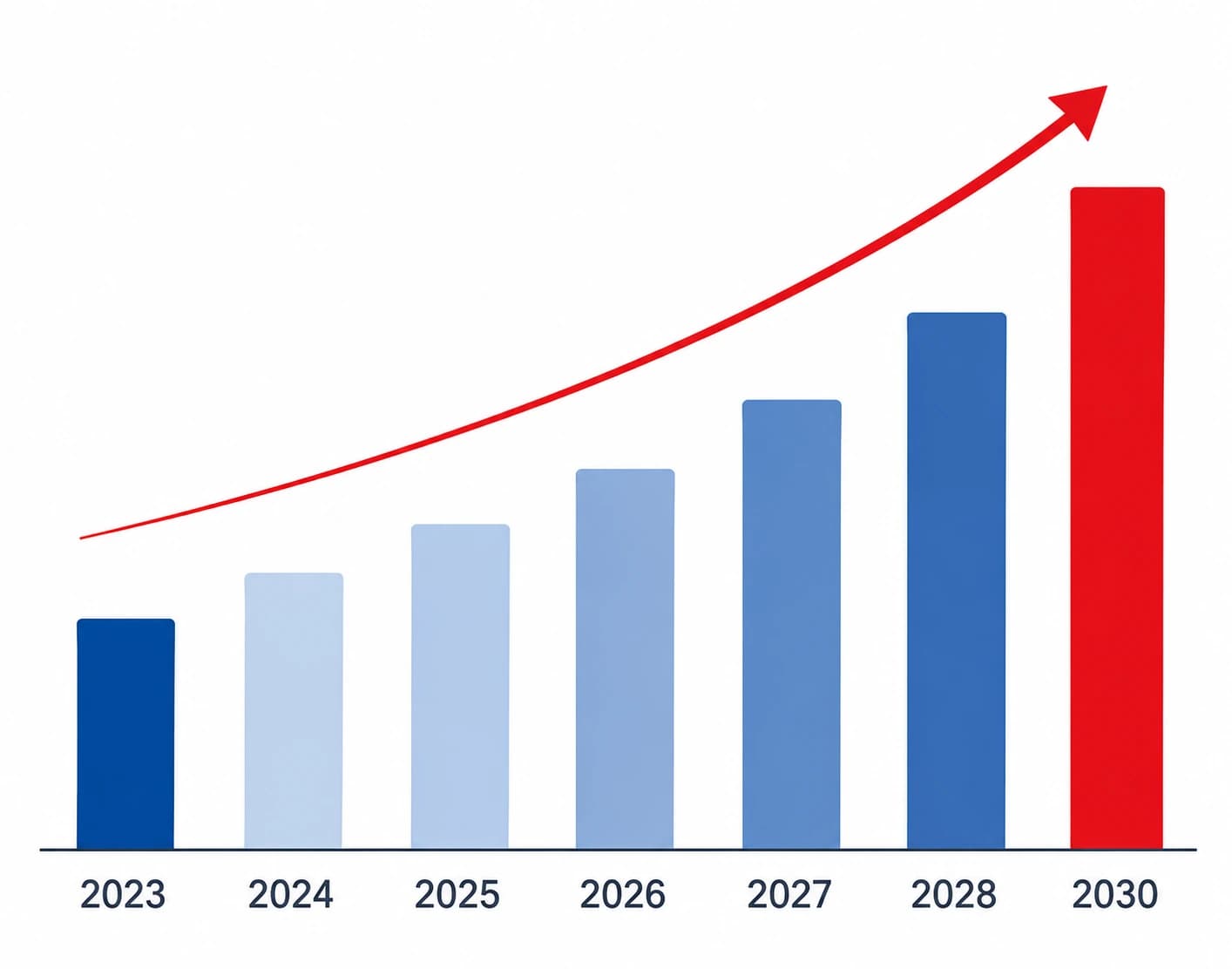
The global Parts Washing Cabinet market was valued at US$ 385 million in 2025 and is anticipated to reach US$ 632 million by 2032, witnessing a CAGR of 7.5% during the forecast period 2026-2032.
Parts Washing Cabinet is a batch parts cleaning machine that is loaded through a front facing access door and runs an automated cycle to remove oils, coolants, particulates, and processing residues from components. Parts are typically placed in a basket, rack, or fixture and cleaned using controlled spray, immersion, or a hybrid approach, followed by rinsing and drying when required. The equipment is engineered to deliver repeatable cleaning quality through managed temperature, pressure, chemistry condition, and filtration, while providing safe and ergonomic loading for operators. It is commonly used to prepare parts for downstream processes such as inspection, assembly, coating, heat treatment, or packaging by producing stable and verifiable surface cleanliness. The unit price of a Parts Washing Cabinet typically tens of thousands of US dollars, with an industry gross profit margin between 25% and 40%.
Upstream, the supply chain begins with stainless steel or coated steel fabrication for the cabinet, door, tank, and internal plumbing, along with pumps, motors, heaters, valves, and piping components designed for hot alkaline solutions or other compatible chemistries. Core functional modules include spray manifolds and nozzles, basket or rack fixtures, door sealing systems, filtration and oil separation hardware, optional rinse stages, and drying units such as heated air blowoff or recirculating hot air. Controls and automation components such as PLCs, HMIs, sensors, safety interlocks, and industrial software are sourced from automation suppliers and integrated by the OEM, while cleaning chemistry and consumables such as detergents, corrosion inhibitors, filters, and test kits are supplied by chemical partners. Downstream, equipment is sold directly or through integrators and distributors to machining and manufacturing plants, aerospace and automotive facilities, remanufacturing operations, and industrial service and maintenance shops, often bundled with installation, commissioning, and operator training. After deployment, recurring revenue and customer retention are driven by preventive maintenance, spare parts, service calls, retrofits, and ongoing purchases of chemistry, filters, and waste handling services, with additional downstream partners supporting wastewater treatment, oil separation, and compliance documentation tied to the cleaning process.
The Parts Washing Cabinet market is shaped by manufacturers and maintenance organizations seeking reliable batch cleaning with predictable cycle times, stable cleanliness outcomes, and straightforward integration into cell based production. Buyers tend to prioritize repeatability, ergonomic loading, operator safety, and ease of changeover across mixed part families, which favors designs with robust door sealing, intuitive recipe control, and consistent spray coverage across baskets or racks. Competitive differentiation increasingly centers on energy and chemistry efficiency, smarter filtration and oil separation, faster drying, and controls that support traceability and preventive maintenance. As environmental expectations tighten and solvent use is restricted in many settings, front loaded systems that perform well with aqueous chemistries and closed loop bath management gain advantage, especially when paired with strong service coverage and applications support. The segment also benefits from its versatility, since it can serve both production and MRO needs, but suppliers must manage price pressure from standardized models while maintaining the ability to deliver application tuned performance for difficult soils and complex geometries.
This report aims to provide a comprehensive presentation of the global market for Parts Washing Cabinet, with both quantitative and qualitative analysis, to help readers develop business/growth strategies, assess the market competitive situation, analyze their position in the current marketplace, and make informed business decisions regarding Parts Washing Cabinet.
The Parts Washing Cabinet market size, estimations, and forecasts are provided in terms of sales quantity (Units) and revenue ($ millions), considering 2025 as the base year, with history and forecast data for the period from 2021 to 2032. This report segments the global Parts Washing Cabinet market comprehensively. Regional market sizes, concerning products by Type, by Application, and by players, are also provided.
For a more in-depth understanding of the market, the report provides profiles of the competitive landscape, key competitors, and their respective market ranks. The report also discusses technological trends and new product developments.
The report will help the Parts Washing Cabinet manufacturers, new entrants, and industry chain related companies in this market with information on the revenues, sales, and average price for the overall market and the sub-segments across the different segments, by company, by Type, by Application, and by regions.
Chapter 1: Introduces the report scope of the report, executive summary of different market segments (by region, product type, application, etc), including the market size of each market segment, future development potential, and so on. It offers a high-level view of the current state of the market and its likely evolution in the short to mid-term, and long term.
Chapter 2: key insights, key emerging trends, etc.
Chapter 3: Manufacturers competitive analysis, detailed analysis of Parts Washing Cabinet manufacturers competitive landscape, price, sales and revenue market share, latest development plan, merger, and acquisition information, etc.
Chapter 4: Provides profiles of key players, introducing the basic situation of the main companies in the market in detail, including product sales, revenue, price, gross margin, product introduction, recent development, etc.
Chapter 5 & 6: Sales, revenue of Parts Washing Cabinet in regional level and country level. It provides a quantitative analysis of the market size and development potential of each region and its main countries and introduces the market development, future development prospects, market space, and market size of each country in the world.
Chapter 7: Provides the analysis of various market segments by Type, covering the market size and development potential of each market segment, to help readers find the blue ocean market in different market segments.
Chapter 8: Provides the analysis of various market segments by Application, covering the market size and development potential of each market segment, to help readers find the blue ocean market in different downstream markets.
Chapter 9: Analysis of industrial chain, including the upstream and downstream of the industry.
Chapter 10: The main points and conclusions of the report.
- ★ What Is The Overall Market Size And Projected Growth Rate Across Global And Regional Segments?
- ★ How Does The Market Size And Growth Outlook Vary Across Major Countries?
- ★ Which Region Or Market Sub-Segment Is Anticipated To Dominate Growth During The Forecast Period?
- ★ What Are The Primary Factors Expected To Drive Market Expansion, And What Challenges May Restrain Growth?
- ★ Which Emerging Technologies And Market Trends Are Shaping The Future Landscape?
- ★ What Are The Most Significant Opportunities Available In The Market?
- ★ Who Are The Leading Manufacturers Actively Participating In The Global Market?
- ★ Which Company Currently Holds The Largest Share Of The Market?
- ★ What Are The Potential Growth Avenues For New Entrants In The Global Market?