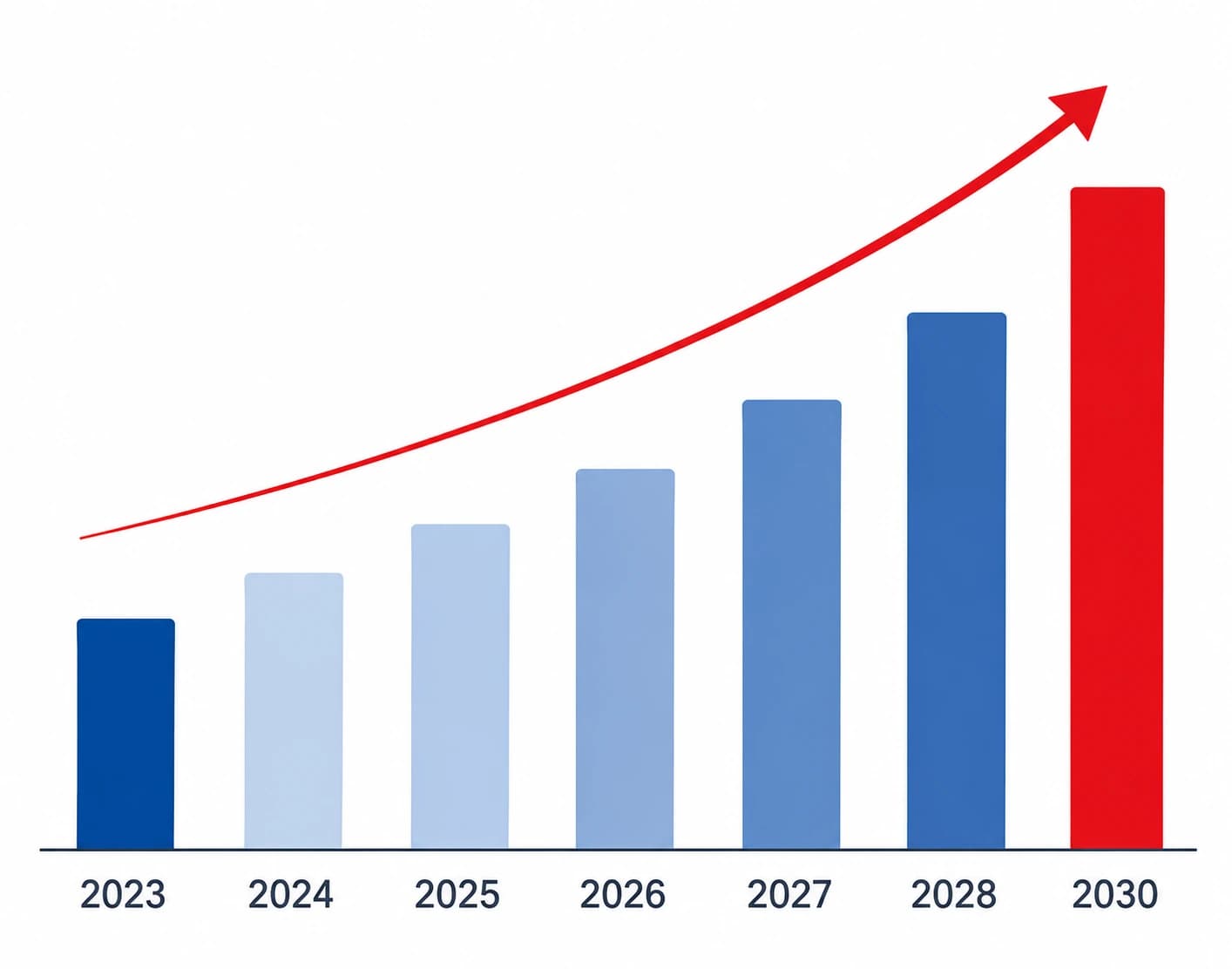
The global market for Growth Hormone Inhibiting Hormone Drug was estimated to be worth US$ 5315 million in 2024 and is forecast to a readjusted size of US$ 12034 million by 2031 with a CAGR of 12.3% during the forecast period 2025-2031.
The potential shifts in the 2025 U.S. tariff framework pose substantial volatility risks to global markets. This report provides a comprehensive assessment of recent tariff adjustments and international strategic countermeasures on Growth Hormone Inhibiting Hormone Drug cross-border industrial footprints, capital allocation patterns, regional economic interdependencies, and supply chain reconfigurations.
Growth Hormone Inhibiting Hormone Drug refers to a class of therapeutics that mimic or potentiate the physiological actions of somatostatin, thereby suppressing the secretion of growth hormone (GH), insulin-like growth factor-1 (IGF-1), and multiple endocrine gland activities. This category includes native somatostatin, synthetic somatostatin analogs (such as octreotide, lanreotide, pasireotide), next-generation long-acting delivery formulations, oral small-molecule agonists, and receptor-selective agents. By activating specific SSTR receptor subtypes, these drugs regulate hormone release and inhibit tumor cell proliferation, with broad clinical applications in acromegaly, neuroendocrine tumors, gastrointestinal hormone disorders, and thyroid conditions.In 2024, global Growth Hormone Inhibiting Hormone Drug production reached approximately 265.75 m units, with an average global market price of around US$ 20 perunit.The average gross profit margin of this product is 65%.
The market for Growth Hormone Inhibiting Hormone Drugs is being propelled by rising demand for endocrine disease management, the expanding adoption of standardized neuroendocrine tumor treatment, and continuous optimization of regulatory pathways for innovative drugs. Annual reports from leading companies highlight that product upgrades—particularly long-acting formulations, multi-receptor agonists with stronger targeting specificity, and more convenient administration routes—are accelerating the shift toward high-value markets and broader indications. Brokerage research further underscores the enhancement of biopharmaceutical manufacturing capacity and global investment in continuous production and bioprocess optimization, strengthening commercialization potential.
Despite strong momentum, the industry faces challenges related to manufacturing complexity, stringent purity and stability requirements, and increasingly tightened supply-chain oversight. Several companies report that large-scale production of complex peptide drugs remains technically demanding. In addition, competition from generics, pressure from reimbursement policies, and uncertainty in pricing reforms may influence profitability. Regulators are raising expectations for quality consistency and full-process compliance, prompting companies to invest more in quality systems and sustainable supply reliability.
Demand is rapidly increasing in three areas: earlier and standardized diagnosis in endocrine diseases; wider clinical pathway inclusion of neuroendocrine tumors, enabling broader first- and second-line use of innovative therapies; and hospital preference for long-acting, personalized, and more convenient formulations. Annual reports also emphasize the accelerating shift toward long-cycle, home-compatible treatment solutions. Real-world evidence is strengthening physician confidence and facilitating clinical adoption.
Upstream materials include complex peptide APIs, synthesis resins and amino acids, conjugation and modification reagents, and materials for long-acting delivery systems. Raw-material suppliers emphasize in annual reports that stringent quality control and environmental stability are essential for consistent manufacturing. With governments prioritizing biopharmaceutical supply-chain resilience, localization and diversification of raw-material sources are becoming critical. Long-acting formulation materials—such as polymers, microspheres, and lipid-based carriers—are increasingly important in partner selection and supply strategy.
This report aims to provide a comprehensive presentation of the global market for Growth Hormone Inhibiting Hormone Drug, focusing on the total sales volume, sales revenue, price, key companies market share and ranking, together with an analysis of Growth Hormone Inhibiting Hormone Drug by region & country, by Type, and by Application.
The Growth Hormone Inhibiting Hormone Drug market size, estimations, and forecasts are provided in terms of sales volume (K Units) and sales revenue ($ millions), considering 2024 as the base year, with history and forecast data for the period from 2020 to 2031. With both quantitative and qualitative analysis, to help readers develop business/growth strategies, assess the market competitive situation, analyze their position in the current marketplace, and make informed business decisions regarding Growth Hormone Inhibiting Hormone Drug.
Chapter 1: Introduces the report scope of the report, global total market size (value, volume and price). This chapter also provides the market dynamics, latest developments of the market, the driving factors and restrictive factors of the market, the challenges and risks faced by manufacturers in the industry, and the analysis of relevant policies in the industry.
Chapter 2: Detailed analysis of Growth Hormone Inhibiting Hormone Drug manufacturers competitive landscape, price, sales and revenue market share, latest development plan, merger, and acquisition information, etc.
Chapter 3: Provides the analysis of various market segments by Type, covering the market size and development potential of each market segment, to help readers find the blue ocean market in different market segments.
Chapter 4: Provides the analysis of various market segments by Application, covering the market size and development potential of each market segment, to help readers find the blue ocean market in different downstream markets.
Chapter 5: Sales, revenue of Growth Hormone Inhibiting Hormone Drug in regional level. It provides a quantitative analysis of the market size and development potential of each region and introduces the market development, future development prospects, market space, and market size of each country in the world.
Chapter 6: Sales, revenue of Growth Hormone Inhibiting Hormone Drug in country level. It provides sigmate data by Type, and by Application for each country/region.
Chapter 7: Provides profiles of key players, introducing the basic situation of the main companies in the market in detail, including product sales, revenue, price, gross margin, product introduction, recent development, etc.
Chapter 8: Analysis of industrial chain, including the upstream and downstream of the industry.
- ★ What Is The Overall Market Size And Projected Growth Rate Across Global And Regional Segments?
- ★ How Does The Market Size And Growth Outlook Vary Across Major Countries?
- ★ Which Region Or Market Sub-Segment Is Anticipated To Dominate Growth During The Forecast Period?
- ★ What Are The Primary Factors Expected To Drive Market Expansion, And What Challenges May Restrain Growth?
- ★ Which Emerging Technologies And Market Trends Are Shaping The Future Landscape?
- ★ What Are The Most Significant Opportunities Available In The Market?
- ★ Who Are The Leading Manufacturers Actively Participating In The Global Market?
- ★ Which Company Currently Holds The Largest Share Of The Market?
- ★ What Are The Potential Growth Avenues For New Entrants In The Global Market?