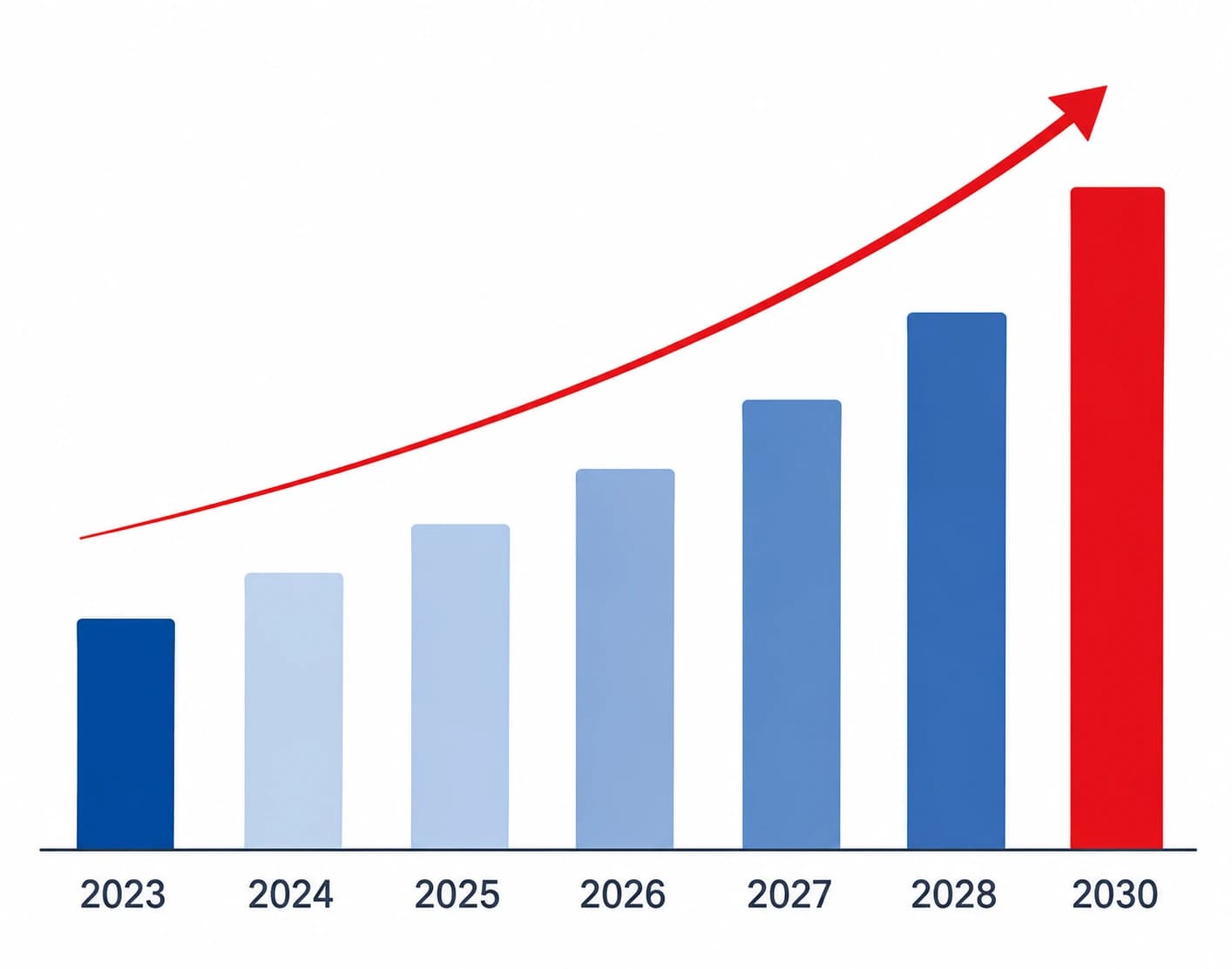
The global Computational Fluid Dynamics (CFD) Simulation Tools market was valued at US$ 1820 million in 2024 and is anticipated to reach US$ 3082 million by 2031, witnessing a CAGR of 7.9% during the forecast period 2025-2031.
CFD is a software application that helps end-users analyze the flow, turbulence, and pressure distribution of liquids and gases, and their interaction with structures. It also helps in predicting fluid flow, mass transfer, chemical reactions, and related phenomena. CFD uses high-speed computers, and various numerical methods and solvers to simulate the flow of fluids (gases and liquids). Simulation refers to the digital prototype of the real-world scenario. This helps detect errors in design before proceeding to production. CFD finds wide ranging applications in industries such as automotive, aerospace and defense, electrical and electronics, and energy. CFDs are used to design fuel systems, engine core compartments, cockpit and cabin ventilation, missiles, submarines, and evaluate aerodynamics in the aerospace and defense industry. This report considers the revenue generated from the offerings of CFD services and products.
The primary market drivers for the CFD industry stem from the growing demand for efficient and precise simulation tools across industrial sectors. As industries such as manufacturing, aerospace, automotive, energy, and electronics increasingly prioritize product performance, CFD technology has become a critical tool for optimizing design, reducing costs, and shortening development cycles. For instance, in the automotive sector, CFD is used to enhance aerodynamic design and thermal management systems; in the energy sector, it helps improve the efficiency of wind turbines and gas turbines; and in the electronics industry, it addresses cooling challenges in high-density electronic devices. Moreover, stringent government regulations on energy conservation and emissions reduction, along with corporate emphasis on sustainable development, further propel the application of CFD technologies. The rise of cloud computing and artificial intelligence (AI) also injects new momentum into the CFD industry, enabling more efficient execution of complex simulations, lowering technical barriers, and reducing usage costs.
Trends in the CFD industry focus on technological convergence and innovative applications. First, cloud-based CFD solutions are gradually becoming mainstream, offering scalable computing resources and collaborative platforms that cater to the needs of small and medium-sized enterprises (SMEs) and research institutions. Second, the importance of multiphysics coupled simulations (such as fluid-structure interaction and fluid-thermal conduction) is becoming increasingly prominent, driving deeper integration between CFD and other simulation tools like Finite Element Analysis (FEA) and electromagnetic simulation. Additionally, AI and machine learning technologies are transforming CFD workflows, for example, by accelerating mesh generation, optimizing parameters, and predicting fluid behavior using AI. The popularity of open-source CFD software (such as OpenFOAM) also fosters industry innovation and knowledge sharing. Finally, with the emergence of digital twin technology, CFD's potential applications in real-time simulation and predictive maintenance are expanding, further broadening its market potential. These trends collectively push the CFD industry towards greater efficiency, intelligence, and accessibility.
This report aims to provide a comprehensive presentation of the global market for Computational Fluid Dynamics (CFD) Simulation Tools, with both quantitative and qualitative analysis, to help readers develop business/growth strategies, assess the market competitive situation, analyze their position in the current marketplace, and make informed business decisions regarding Computational Fluid Dynamics (CFD) Simulation Tools.
The Computational Fluid Dynamics (CFD) Simulation Tools market size, estimations, and forecasts are provided in terms of revenue ($ millions), considering 2024 as the base year, with history and forecast data for the period from 2020 to 2031. This report segments the global Computational Fluid Dynamics (CFD) Simulation Tools market comprehensively. Regional market sizes, concerning products by Type, by Application, and by players, are also provided.
For a more in-depth understanding of the market, the report provides profiles of the competitive landscape, key competitors, and their respective market ranks. The report also discusses technological trends and new product developments.
The report will help the Computational Fluid Dynamics (CFD) Simulation Tools manufacturers, new entrants, and industry chain related companies in this market with information on the revenues for the overall market and the sub-segments across the different segments, by company, by Type, by Application, and by regions.
Chapter 1: Introduces the report scope of the report, executive summary of different market segments (by region, product type, application, etc), including the market size of each market segment, future development potential, and so on. It offers a high-level view of the current state of the market and its likely evolution in the short to mid-term, and long term.
Chapter 2: key insights, key emerging trends, etc.
Chapter 3: Manufacturers competitive analysis, detailed analysis of Computational Fluid Dynamics (CFD) Simulation Tools manufacturers competitive landscape, revenue market share, latest development plan, merger, and acquisition information, etc.
Chapter 4: Provides profiles of key players, introducing the basic situation of the main companies in the market in detail, including product revenue, gross margin, product introduction, recent development, etc.
Chapter 5 & 6: Revenue of Computational Fluid Dynamics (CFD) Simulation Tools in regional level and country level. It provides a quantitative analysis of the market size and development potential of each region and its main countries and introduces the market development, future development prospects, market space, and market size of each country in the world.
Chapter 7: Provides the analysis of various market segments by Type, covering the market size and development potential of each market segment, to help readers find the blue ocean market in different market segments.
Chapter 8: Provides the analysis of various market segments by Application, covering the market size and development potential of each market segment, to help readers find the blue ocean market in different downstream markets.
Chapter 9: Analysis of industrial chain, including the upstream and downstream of the industry.
Chapter 10: The main points and conclusions of the report.
- ★ What Is The Overall Market Size And Projected Growth Rate Across Global And Regional Segments?
- ★ How Does The Market Size And Growth Outlook Vary Across Major Countries?
- ★ Which Region Or Market Sub-Segment Is Anticipated To Dominate Growth During The Forecast Period?
- ★ What Are The Primary Factors Expected To Drive Market Expansion, And What Challenges May Restrain Growth?
- ★ Which Emerging Technologies And Market Trends Are Shaping The Future Landscape?
- ★ What Are The Most Significant Opportunities Available In The Market?
- ★ Who Are The Leading Manufacturers Actively Participating In The Global Market?
- ★ Which Company Currently Holds The Largest Share Of The Market?
- ★ What Are The Potential Growth Avenues For New Entrants In The Global Market?