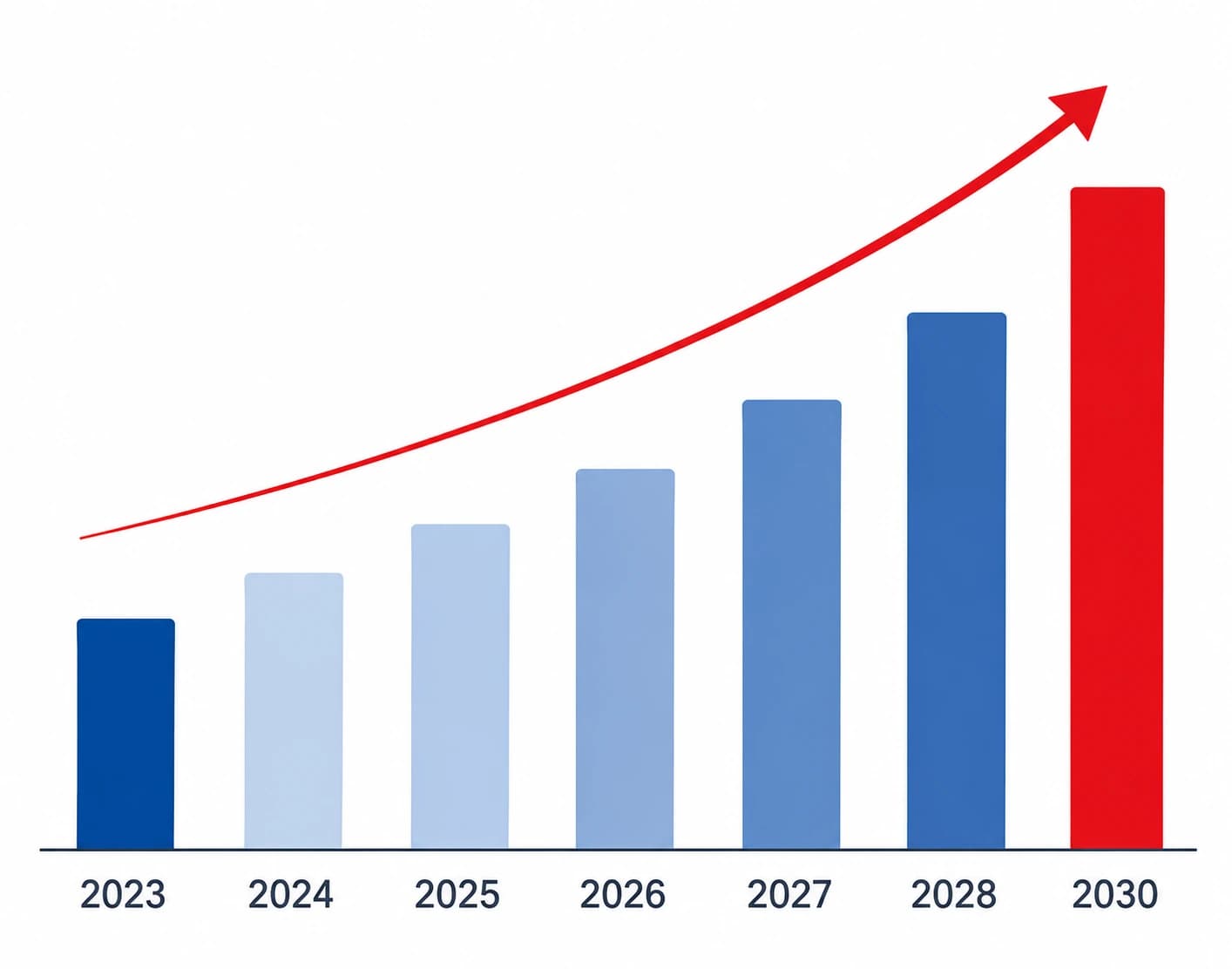
The global Hygienic Pumps (Sanitary Pumps) market was valued at US$ 4853 million in 2024 and is anticipated to reach US$ 6641 million by 2031, witnessing a CAGR of 4.2% during the forecast period 2025-2031.
Hygienic Pumps (Sanitary Pumps) are a type of fluid handling equipment designed specifically for industries such as food, beverages, and biopharmaceuticals, which require extremely high cleanliness levels. Their core features lie in their excellent hygiene, safety, and corrosion resistance. The pump's interior is constructed of high-grade stainless steel (such as 316L) and features a high-precision polished surface, ensuring no dead spots, no residue, and easy cleaning. They also support automated cleaning processes such as CIP (cleaning in place) and SIP (sterilization in place). Hygienic Pumps come in a variety of configurations, including centrifugal, rotary, screw, and diaphragm pumps. They can accommodate a wide range of operating conditions, from low to high viscosity, and from clean liquids to media containing particles. Their design and manufacturing strictly adhere to international hygiene standards, such as 3A, FDA, and EHEDG, making them key equipment for achieving high-standard fluid handling processes.
Hygienic pumps are key equipment for safe fluid transfer, precise metering, and automated CIP/SIP cleaning.
Global leading companies, including GEA, Alfa Laval, Fristam, Spx Flow, INOXPA, Verder, SEEPEX, Börger, Grundfos, Xylem, and KSB, possess extensive manufacturing expertise and industry application experience. Through modular design, digital monitoring, and intelligent pump systems, they continuously set industry standards and lead the technological advancement of hygienic pumps.
Hygienic pumps can be categorized by principle into two main types: centrifugal and positive displacement. Subcategories include rotary lobe pumps, progressive cavity pumps, and diaphragm pumps. Different types are suitable for diverse applications, including low-viscosity liquids, high-flow cleaning fluids, high-viscosity pastes, and fluids containing particles or shear-sensitive fluids, covering the entire process from raw material processing to final filling.
With the development of smart factories and digital production, hygienic pumps are evolving towards intelligent control, self-diagnosis, remote monitoring, and system integration. International brands (such as Alfa Laval, GEA Group, SEEPEX, Spx Flow, etc.) have widely launched IIoT-enabled smart pump products, driving the development of fluid handling systems from "stand-alone functions" to integrated solutions of "process closed loop + data closed loop".
This report aims to provide a comprehensive presentation of the global market for Hygienic Pumps (Sanitary Pumps), with both quantitative and qualitative analysis, to help readers develop business/growth strategies, assess the market competitive situation, analyze their position in the current marketplace, and make informed business decisions regarding Hygienic Pumps (Sanitary Pumps).
The Hygienic Pumps (Sanitary Pumps) market size, estimations, and forecasts are provided in terms of sales quantity (K Units) and revenue ($ millions), considering 2024 as the base year, with history and forecast data for the period from 2020 to 2031. This report segments the global Hygienic Pumps (Sanitary Pumps) market comprehensively. Regional market sizes, concerning products by Working Principle, by Application, and by players, are also provided.
For a more in-depth understanding of the market, the report provides profiles of the competitive landscape, key competitors, and their respective market ranks. The report also discusses technological trends and new product developments.
The report will help the Hygienic Pumps (Sanitary Pumps) manufacturers, new entrants, and industry chain related companies in this market with information on the revenues, sales, and average price for the overall market and the sub-segments across the different segments, by company, by Working Principle, by Application, and by regions.
Chapter 1: Introduces the report scope of the report, executive summary of different market segments (by region, product type, application, etc), including the market size of each market segment, future development potential, and so on. It offers a high-level view of the current state of the market and its likely evolution in the short to mid-term, and long term.
Chapter 2: key insights, key emerging trends, etc.
Chapter 3: Manufacturers competitive analysis, detailed analysis of Hygienic Pumps (Sanitary Pumps) manufacturers competitive landscape, price, sales and revenue market share, latest development plan, merger, and acquisition information, etc.
Chapter 4: Provides profiles of key players, introducing the basic situation of the main companies in the market in detail, including product sales, revenue, price, gross margin, product introduction, recent development, etc.
Chapter 5 & 6: Sales, revenue of Hygienic Pumps (Sanitary Pumps) in regional level and country level. It provides a quantitative analysis of the market size and development potential of each region and its main countries and introduces the market development, future development prospects, market space, and market size of each country in the world.
Chapter 7: Provides the analysis of various market segments by Working Principle, covering the market size and development potential of each market segment, to help readers find the blue ocean market in different market segments.
Chapter 8: Provides the analysis of various market segments by Application, covering the market size and development potential of each market segment, to help readers find the blue ocean market in different downstream markets.
Chapter 9: Analysis of industrial chain, including the upstream and downstream of the industry.
Chapter 10: The main points and conclusions of the report.
- ★ What Is The Overall Market Size And Projected Growth Rate Across Global And Regional Segments?
- ★ How Does The Market Size And Growth Outlook Vary Across Major Countries?
- ★ Which Region Or Market Sub-Segment Is Anticipated To Dominate Growth During The Forecast Period?
- ★ What Are The Primary Factors Expected To Drive Market Expansion, And What Challenges May Restrain Growth?
- ★ Which Emerging Technologies And Market Trends Are Shaping The Future Landscape?
- ★ What Are The Most Significant Opportunities Available In The Market?
- ★ Who Are The Leading Manufacturers Actively Participating In The Global Market?
- ★ Which Company Currently Holds The Largest Share Of The Market?
- ★ What Are The Potential Growth Avenues For New Entrants In The Global Market?