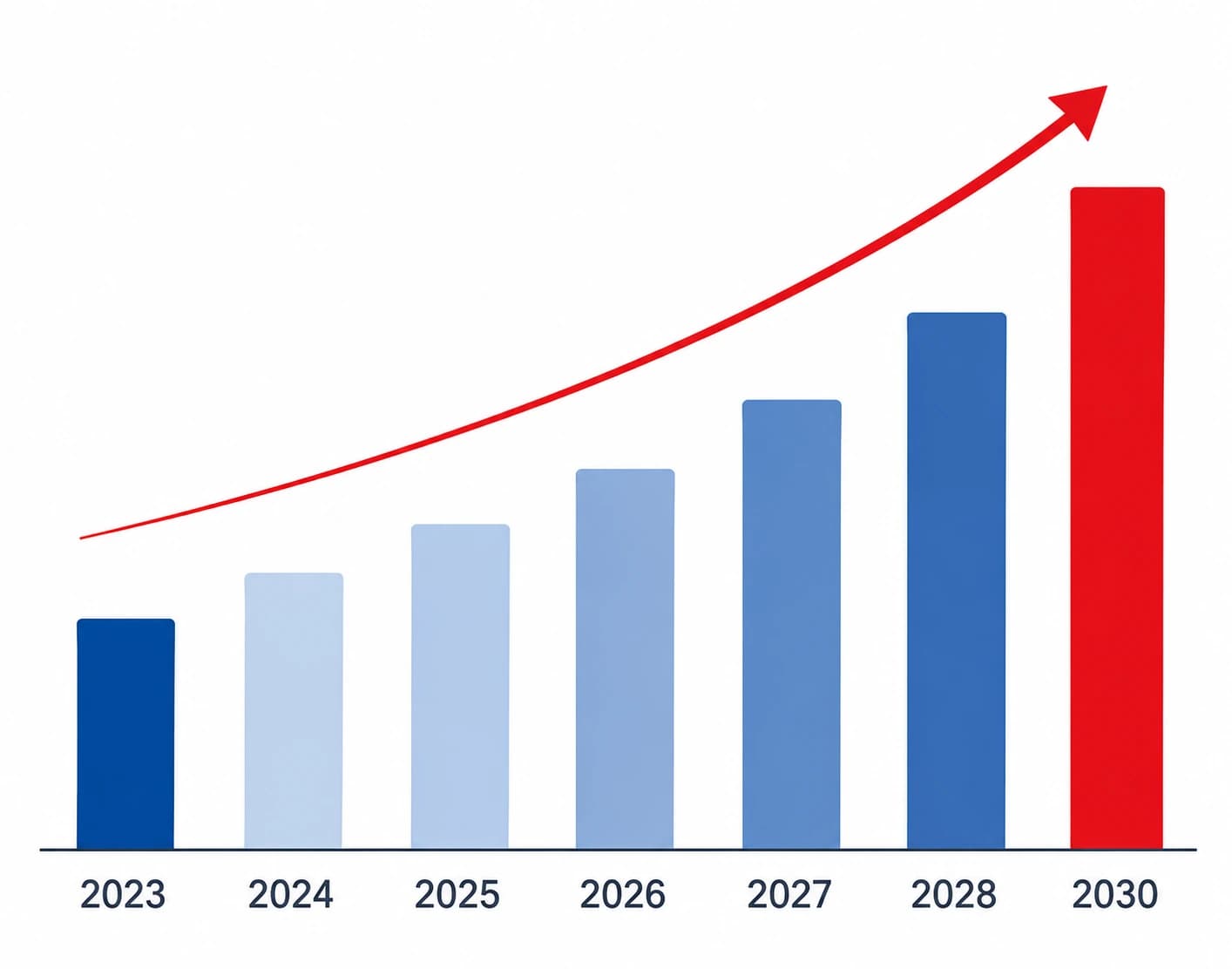
The global Optical Frequency Combs (OFC) market was valued at US$ 53.2 million in 2024 and is anticipated to reach US$ 94.4 million by 2031, witnessing a CAGR of 8.3% during the forecast period 2025-2031.
An optical frequency comb is a mode-locked laser that is frequency and phase locked. This optical frequency comb laser has strictly equal frequency intervals in the frequency domain, similar to the teeth of a comb. Optical frequency comb is another major breakthrough in the field of laser technology after the advent of ultra-short pulse laser. With the rapid development of optical communication technology, optical frequency comb has attracted more and more scholars' attention due to its wide application in optical arbitrary waveform generation, multi-wavelength ultrashort pulse generation and dense wavelength division multiplexing.
The optical frequency comb market is experiencing accelerated growth, primarily driven by the continuous evolution of optical communication technologies and the increasing demand for precision measurement in scientific research. Although current applications are still concentrated in research domains, the technology has already been widely adopted in areas such as optical clocks, laser ranging, high-precision spectroscopy, astronomy, quantum control, and beyond. Among the available product types, femtosecond-based mode-locked laser combs continue to dominate, reflecting their technical maturity. Additionally, integrated microcavity comb technologies have made significant progress, opening pathways toward applications in lidar, industrial metrology, and photonic integration. The future outlook for optical frequency combs is highly promising. With ongoing advancements in miniaturization, power efficiency, and system integration, the applicability of the technology in practical and commercial scenarios is expected to increase significantly. The market is likely to witness a shift from lab-based research tools to deployable industrial and commercial systems. In the coming years, adoption is expected to grow steadily in sectors such as precision manufacturing, communication systems, photonic chips, and biomedical imaging—ushering in a broader era of real-world implementation. The expansion of the optical frequency comb market is powered by several key drivers: growing demand from high-end scientific research, rapid technological innovation, increased public and private R&D funding, and the exploration of novel application areas. Pioneering companies like Japan’s XTIA have already demonstrated the potential for industrial deployment, setting an example for commercial viability. However, there are still notable challenges—high production costs, complex system integration, steep technical learning curves, underdeveloped standardization frameworks, and a lack of user education outside the research community—all of which may temporarily constrain broader commercial adoption.
This report aims to provide a comprehensive presentation of the global market for Optical Frequency Combs (OFC), with both quantitative and qualitative analysis, to help readers develop business/growth strategies, assess the market competitive situation, analyze their position in the current marketplace, and make informed business decisions regarding Optical Frequency Combs (OFC).
The Optical Frequency Combs (OFC) market size, estimations, and forecasts are provided in terms of sales quantity (Units) and revenue ($ millions), considering 2024 as the base year, with history and forecast data for the period from 2020 to 2031. This report segments the global Optical Frequency Combs (OFC) market comprehensively. Regional market sizes, concerning products by Type, by Application, and by players, are also provided.
For a more in-depth understanding of the market, the report provides profiles of the competitive landscape, key competitors, and their respective market ranks. The report also discusses technological trends and new product developments.
The report will help the Optical Frequency Combs (OFC) manufacturers, new entrants, and industry chain related companies in this market with information on the revenues, sales, and average price for the overall market and the sub-segments across the different segments, by company, by Type, by Application, and by regions.
Chapter 1: Introduces the report scope of the report, executive summary of different market segments (by region, product type, application, etc), including the market size of each market segment, future development potential, and so on. It offers a high-level view of the current state of the market and its likely evolution in the short to mid-term, and long term.
Chapter 2: key insights, key emerging trends, etc.
Chapter 3: Manufacturers competitive analysis, detailed analysis of Optical Frequency Combs (OFC) manufacturers competitive landscape, price, sales and revenue market share, latest development plan, merger, and acquisition information, etc.
Chapter 4: Provides profiles of key players, introducing the basic situation of the main companies in the market in detail, including product sales, revenue, price, gross margin, product introduction, recent development, etc.
Chapter 5 & 6: Sales, revenue of Optical Frequency Combs (OFC) in regional level and country level. It provides a quantitative analysis of the market size and development potential of each region and its main countries and introduces the market development, future development prospects, market space, and market size of each country in the world.
Chapter 7: Provides the analysis of various market segments by Type, covering the market size and development potential of each market segment, to help readers find the blue ocean market in different market segments.
Chapter 8: Provides the analysis of various market segments by Application, covering the market size and development potential of each market segment, to help readers find the blue ocean market in different downstream markets.
Chapter 9: Analysis of industrial chain, including the upstream and downstream of the industry.
Chapter 10: The main points and conclusions of the report.
- ★ What Is The Overall Market Size And Projected Growth Rate Across Global And Regional Segments?
- ★ How Does The Market Size And Growth Outlook Vary Across Major Countries?
- ★ Which Region Or Market Sub-Segment Is Anticipated To Dominate Growth During The Forecast Period?
- ★ What Are The Primary Factors Expected To Drive Market Expansion, And What Challenges May Restrain Growth?
- ★ Which Emerging Technologies And Market Trends Are Shaping The Future Landscape?
- ★ What Are The Most Significant Opportunities Available In The Market?
- ★ Who Are The Leading Manufacturers Actively Participating In The Global Market?
- ★ Which Company Currently Holds The Largest Share Of The Market?
- ★ What Are The Potential Growth Avenues For New Entrants In The Global Market?