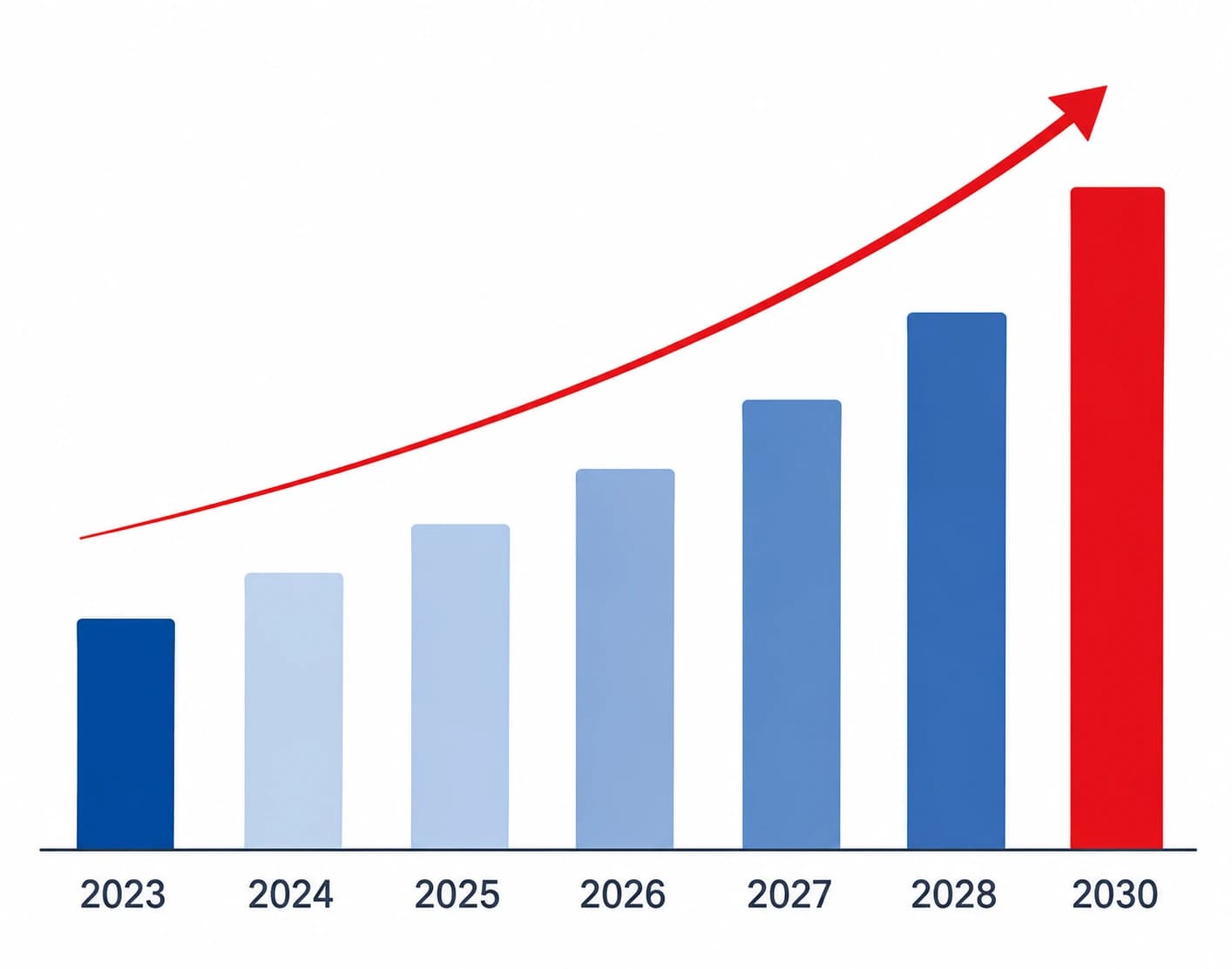
The global Printed Circuit Board Shredder market was valued at US$ 51.30 million in 2025 and is anticipated to reach US$ 81.48 million by 2032, at a CAGR of 6.9% from 2026 to 2032.
The 2025 U.S. tariff policies introduce profound uncertainty into the global economic landscape. This report critically examines the implications of recent tariff adjustments and international strategic countermeasures on Printed Circuit Board Shredder competitive dynamics, regional economic interdependencies, and supply chain reconfigurations.
A Printed Circuit Board Shredder, commonly referred to as a PCB shredder, is an industrial size-reduction machine used in the mechanical pre-treatment of waste printed circuit boards, electronic scrap, populated boards, copper-clad laminate residues and related electronic assemblies. The equipment applies low-speed high-torque shearing, single-shaft cutting with ram feeding, four-shaft controlled sizing, hammer-mill impact or cross-flow disintegration to reduce PCB materials into fractions suitable for downstream magnetic separation, screening, air classification, electrostatic separation, density separation or precious-metal recovery. In practical recycling lines, a PCB shredder is typically integrated with feeding conveyors, dust collection, sound insulation, safety interlocks, metal separation and programmable control systems. Key purchasing and performance criteria include throughput, output particle size, liberation efficiency, blade durability, dust and fire-risk control, energy consumption, maintenance access and compatibility with downstream separation modules.
Indicative pricing varies materially by region and configuration: small and mid-range Chinese or Taiwanese systems are commonly assessed in the USD 25,000–120,000 range, while European and North American industrial-grade standalone machines or integrated modules may reach USD 100,000–420,000 depending on duty class, automation and environmental protection requirements.
Based on our research, the printed circuit board shredder market should be understood as a narrow but essential equipment segment within the broader WEEE, e-scrap and PCB recycling value chain. Its core function is not simply waste volume reduction, but controlled mechanical liberation: converting complex PCB assemblies, copper-clad laminates and populated boards into a material stream that can be further separated by magnetic, air, electrostatic, density or metallurgical processes. This report therefore adopts a narrow statistical scope and focuses on dedicated or semi-dedicated PCB shredding and crushing equipment rather than complete e-waste recycling plants, precious-metal recovery systems or general-purpose industrial shredders.
From a supply perspective, the market is structurally fragmented but technically tiered. European suppliers are relatively strong in engineered WEEE plants, environmental compliance, mechanical disintegration and system integration. North American suppliers tend to be positioned around robust industrial shredders, low-speed high-torque equipment and heavy-duty recycling applications. Chinese and Taiwanese suppliers provide a broader base of modular, cost-competitive PCB shredders, crushing systems and recycling lines, serving both domestic and export markets. The difference between the broad supplier longlist and the core formal list is therefore important: many firms can supply adjacent shredding equipment, but only a smaller group has clear official evidence for PCB, circuit board or e-scrap applications.
Demand is primarily driven by three customer groups: regulated WEEE recyclers that need to process dismantled PCB fractions; electronics and PCB manufacturers handling production scrap and rejected boards; and metal recovery operators that require consistent pre-treated feedstock for downstream copper and precious-metal recovery. The long-term demand backdrop is supported by the continued growth of global e-waste volumes and the gap between e-waste generation and formally documented recycling. However, the addressable market remains modest because a PCB shredder is usually one module within a larger recycling line, and because many machines are multi-application assets that can also process hard drives, cables, small appliances and mixed electronics.
Product development is expected to remain evolutionary rather than disruptive. The main direction is toward more reliable low-speed high-torque shredding, better blade metallurgy, improved dust and fire-risk control, particle-size consistency, automated feeding, digital monitoring and tighter integration with downstream separation systems. In higher-value applications, customers increasingly evaluate the total recovery performance of a line rather than the shredder alone. This favours suppliers with process know-how and system engineering capability, while leaving room for cost-efficient Asian manufacturers in standardised and mid-capacity applications.
The industry outlook is positive but should be framed conservatively. Regulatory pressure, circular economy policies, critical-metal recovery and electronics replacement cycles support continued investment in formal recycling infrastructure. At the same time, improved product design for recyclability, consolidation among recyclers and outsourcing to large integrated recycling plants may limit the growth of small standalone machines. The most likely competitive trajectory is a tiered structure: European and North American suppliers retaining premium and complex projects; Chinese and Taiwanese suppliers expanding in modular and value-oriented systems; and regional integrators filling installation, service and retrofit gaps.
This report delivers a comprehensive overview of the global Printed Circuit Board Shredder market, with both quantitative and qualitative analyses, to help readers develop growth strategies, assess the competitive landscape, evaluate their position in the current market, and make informed business decisions regarding Printed Circuit Board Shredder. The Printed Circuit Board Shredder market size, estimates, and forecasts are provided in terms of output/shipments (Units) and revenue (US$ millions), with 2025 as the base year and historical and forecast data for 2021–2032.
The report segments the global Printed Circuit Board Shredder market comprehensively. Regional market sizes by Equipment Function, by Application, by Shredder Configuration, and by company are also provided. For deeper insight, the report profiles the competitive landscape, key competitors, and their respective market rankings, and discusses technological trends and new product developments.
This report will assist Printed Circuit Board Shredder manufacturers, new entrants, and companies across the industry value chain with information on revenues, production, and average prices for the overall market and its sub-segments, by company, by Equipment Function, by Application, and by region.
Chapter 1: Defines the scope of the report and presents an executive summary of market segments (by Equipment Function, by Application, by Shredder Configuration, etc.), including the size of each segment and its future growth potential. It offers a high-level view of the current market and its likely evolution in the short, medium, and long term.
Chapter 2: Provides a detailed analysis of the competitive landscape for Printed Circuit Board Shredder manufacturers, including prices, production, value-based market shares, latest development plans, and information on mergers and acquisitions.
Chapter 3: Examines Printed Circuit Board Shredder production/output and value by region and country, providing a quantitative assessment of market size and growth potential for each region over the next six years.
Chapter 4: Analyzes Printed Circuit Board Shredder consumption at the regional and country levels. It quantifies market size and growth potential for each region and its key countries, and outlines market development, outlook, addressable space, and national production.
Chapter 5: Analyzes market segments by Equipment Function, covering the size and growth potential of each segment to help readers identify “blue ocean” opportunities.
Chapter 6: Analyzes market segments by Application, covering the size and growth potential of each segment to help readers identify “blue ocean” opportunities in downstream markets.
Chapter 7: Profiles key players, detailing the fundamentals of major companies, including product production/output, value, price, gross margin, product portfolio/introductions, and recent developments.
Chapter 8: Reviews the industry value chain, including upstream and downstream segments.
Chapter 9: Discusses market dynamics and recent developments, including drivers, restraints, challenges and risks for manufacturers, U.S. Tariffs and relevant policy analysis.
Chapter 10: Summarizes the key findings and conclusions of the report.
- ★ What Is The Overall Market Size And Projected Growth Rate Across Global And Regional Segments?
- ★ How Does The Market Size And Growth Outlook Vary Across Major Countries?
- ★ Which Region Or Market Sub-Segment Is Anticipated To Dominate Growth During The Forecast Period?
- ★ What Are The Primary Factors Expected To Drive Market Expansion, And What Challenges May Restrain Growth?
- ★ Which Emerging Technologies And Market Trends Are Shaping The Future Landscape?
- ★ What Are The Most Significant Opportunities Available In The Market?
- ★ Who Are The Leading Manufacturers Actively Participating In The Global Market?
- ★ Which Company Currently Holds The Largest Share Of The Market?
- ★ What Are The Potential Growth Avenues For New Entrants In The Global Market?