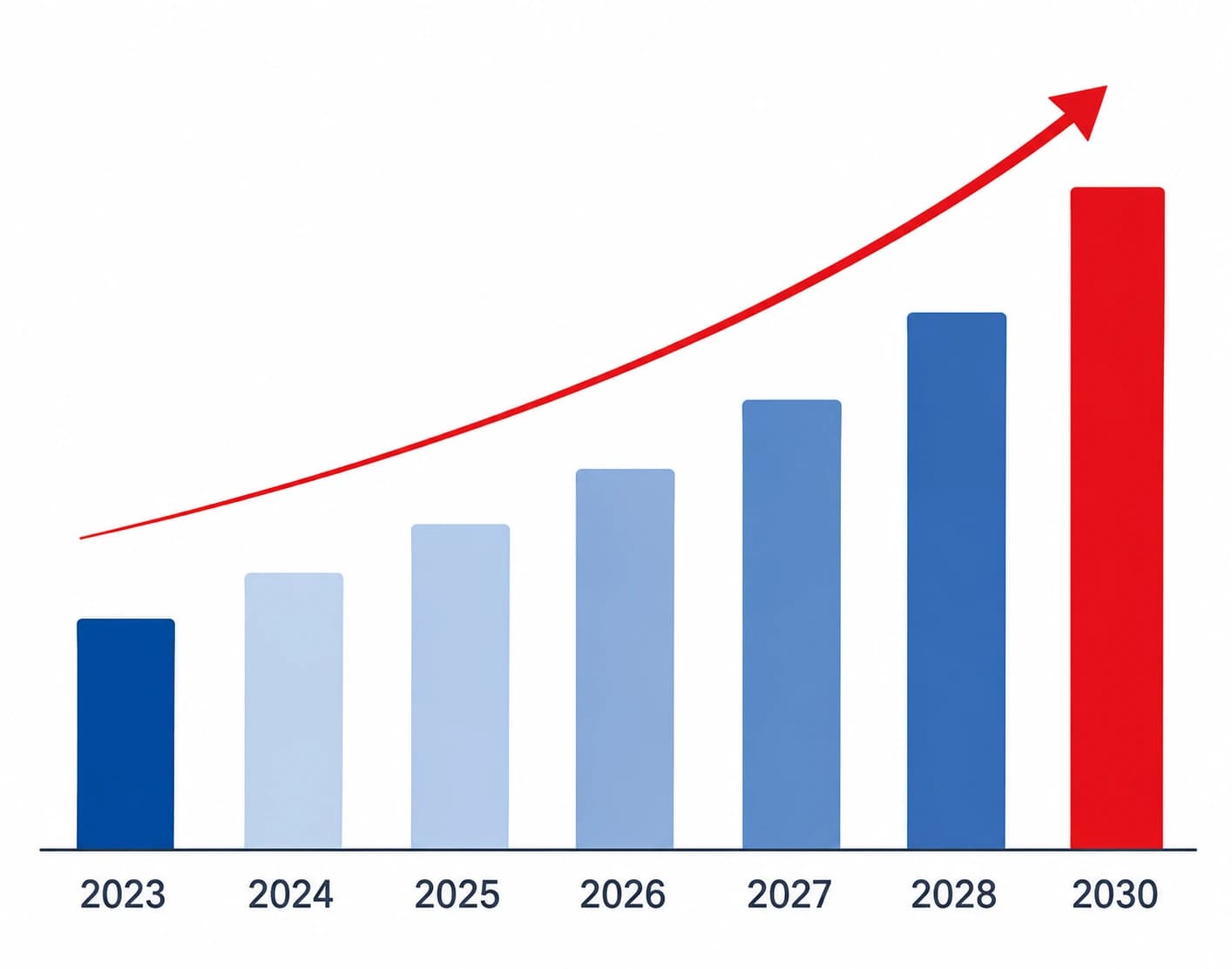
The global Clinical Mass Spectrometry market was valued at US$ 1009 million in 2024 and is anticipated to reach US$ 1961 million by 2031, witnessing a CAGR of 10.1% during the forecast period 2025-2031.
Mass spectrometry is an analytic technique with high specificity and a growing presence in laboratory medicine. Various types of mass spectrometers are being used in an increasing number of clinical laboratories around the world, and, as a result, significant improvements in assay performance are occurring rapidly in areas such as toxicology, endocrinology, and biochemical genetics. Clinical mass spectrometry uses the mass spectrometry technology for diagnostic purposes. Employed by medical labs, clinical mass spectrometry is used to diagnose metabolism deficiencies, to determine whether biomarkers or enzymes are present, and for toxicology testing.
Clinical Mass Spectrometry Market Drivers:
Rising Demand for Personalized Medicine: The increasing focus on personalized medicine in diagnosing and treating diseases is driving the demand for clinical mass spectrometry. Its ability to accurately analyze biomarkers, metabolites, and proteins makes it a key tool in personalized healthcare.
Technological Advancements: Innovations in mass spectrometry, such as higher sensitivity, faster analysis, and miniaturization, have expanded its clinical applications, improving diagnostic accuracy and speeding up workflows in laboratories.
Growing Prevalence of Chronic Diseases: The rising incidence of chronic diseases like cancer, cardiovascular disorders, and metabolic conditions has increased the need for precise diagnostic tools, further propelling the adoption of mass spectrometry in clinical settings.
Expanding Use in Clinical Diagnostics: Mass spectrometry is being increasingly applied in clinical diagnostics, including newborn screening, therapeutic drug monitoring, and toxicology testing, due to its accuracy, sensitivity, and ability to detect low-abundance molecules.
Clinical Mass Spectrometry Market Challenges:
High Equipment and Operational Costs: Clinical mass spectrometers are expensive to purchase and maintain, limiting their adoption, especially in smaller laboratories or in low- and middle-income countries where budgets are constrained.
Requirement for Skilled Personnel: The operation and interpretation of mass spectrometry data require highly trained professionals. A shortage of skilled personnel in many regions can hinder the widespread use of this technology.
Complexity and Time-Intensive Nature of the Technique: While mass spectrometry provides highly accurate results, the complexity of sample preparation and the time required for analysis can be a limiting factor in high-throughput clinical settings.
Regulatory Barriers: The approval process for new mass spectrometry-based diagnostic tests can be slow due to stringent regulatory requirements, delaying the introduction of innovative solutions into the clinical market.
Global clinical mass spectrometry key players include Danaher, Bruker, Thermo Fisher, Agilent, Waters, etc. Global top 5 manufacturers hold a share about 80%. North America is the largest market, with a share about 40%, followed by Europe, with a share about 34%.In terms of product, LC-MS is the largest segment, with a share over 75%. And in terms of application, the largest application is clinical diagnostics, followed by clinical research.
This report aims to provide a comprehensive presentation of the global market for Clinical Mass Spectrometry, with both quantitative and qualitative analysis, to help readers develop business/growth strategies, assess the market competitive situation, analyze their position in the current marketplace, and make informed business decisions regarding Clinical Mass Spectrometry.
The Clinical Mass Spectrometry market size, estimations, and forecasts are provided in terms of sales quantity (K Units) and revenue ($ millions), considering 2024 as the base year, with history and forecast data for the period from 2020 to 2031. This report segments the global Clinical Mass Spectrometry market comprehensively. Regional market sizes, concerning products by Type, by Application, and by players, are also provided.
For a more in-depth understanding of the market, the report provides profiles of the competitive landscape, key competitors, and their respective market ranks. The report also discusses technological trends and new product developments.
The report will help the Clinical Mass Spectrometry manufacturers, new entrants, and industry chain related companies in this market with information on the revenues, sales, and average price for the overall market and the sub-segments across the different segments, by company, by Type, by Application, and by regions.
Chapter 1: Introduces the report scope of the report, executive summary of different market segments (by region, product type, application, etc), including the market size of each market segment, future development potential, and so on. It offers a high-level view of the current state of the market and its likely evolution in the short to mid-term, and long term.
Chapter 2: key insights, key emerging trends, etc.
Chapter 3: Manufacturers competitive analysis, detailed analysis of Clinical Mass Spectrometry manufacturers competitive landscape, price, sales and revenue market share, latest development plan, merger, and acquisition information, etc.
Chapter 4: Provides profiles of key players, introducing the basic situation of the main companies in the market in detail, including product sales, revenue, price, gross margin, product introduction, recent development, etc.
Chapter 5 & 6: Sales, revenue of Clinical Mass Spectrometry in regional level and country level. It provides a quantitative analysis of the market size and development potential of each region and its main countries and introduces the market development, future development prospects, market space, and market size of each country in the world.
Chapter 7: Provides the analysis of various market segments by Type, covering the market size and development potential of each market segment, to help readers find the blue ocean market in different market segments.
Chapter 8: Provides the analysis of various market segments by Application, covering the market size and development potential of each market segment, to help readers find the blue ocean market in different downstream markets.
Chapter 9: Analysis of industrial chain, including the upstream and downstream of the industry.
Chapter 10: The main points and conclusions of the report.
- ★ What Is The Overall Market Size And Projected Growth Rate Across Global And Regional Segments?
- ★ How Does The Market Size And Growth Outlook Vary Across Major Countries?
- ★ Which Region Or Market Sub-Segment Is Anticipated To Dominate Growth During The Forecast Period?
- ★ What Are The Primary Factors Expected To Drive Market Expansion, And What Challenges May Restrain Growth?
- ★ Which Emerging Technologies And Market Trends Are Shaping The Future Landscape?
- ★ What Are The Most Significant Opportunities Available In The Market?
- ★ Who Are The Leading Manufacturers Actively Participating In The Global Market?
- ★ Which Company Currently Holds The Largest Share Of The Market?
- ★ What Are The Potential Growth Avenues For New Entrants In The Global Market?