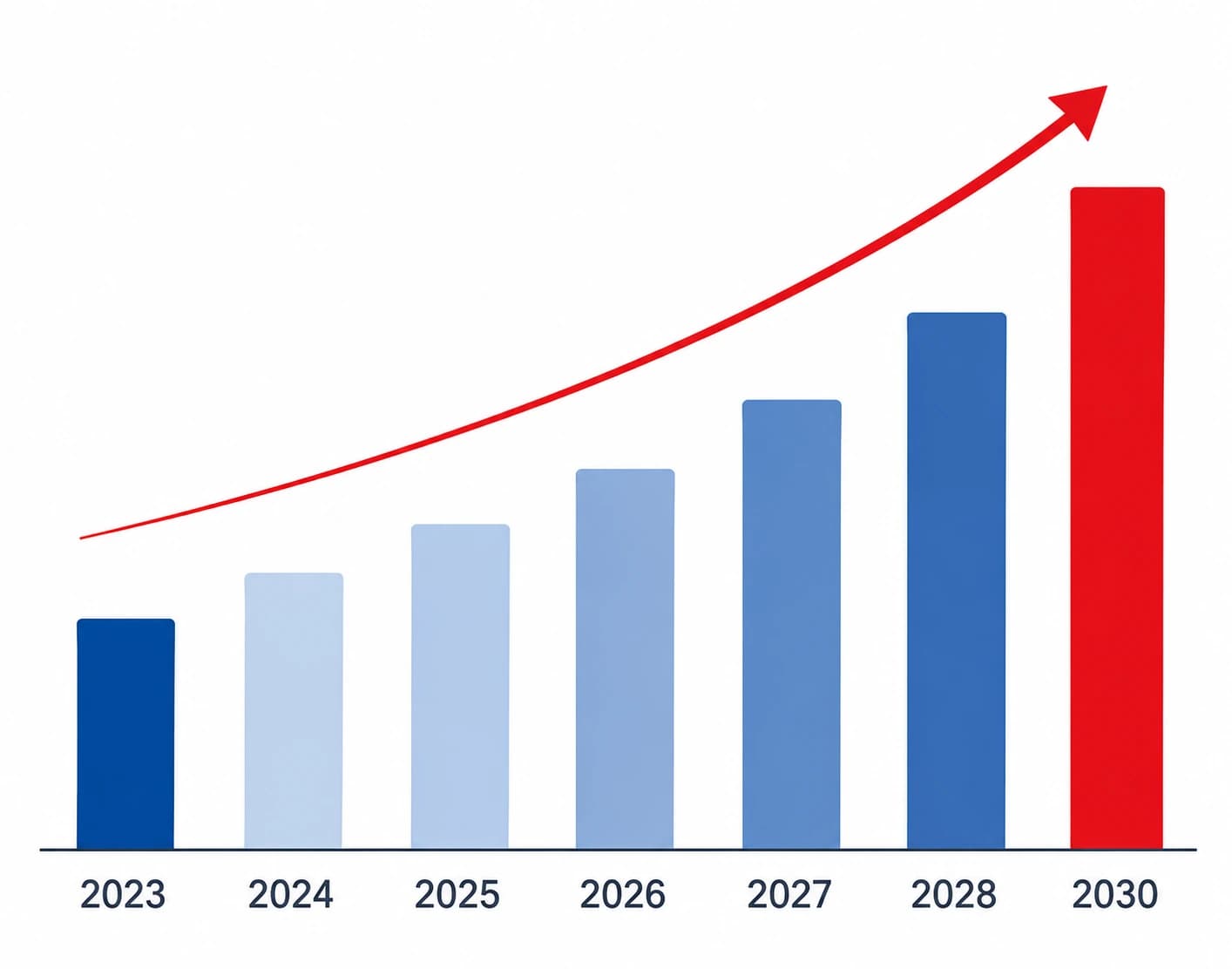
The global Commercial Vehicle Electric Drive Axle market was valued at US$ 1776 million in 2025 and is anticipated to reach US$ 7633 million by 2032, witnessing a CAGR of 23.5% during the forecast period 2026-2032.
In 2024, global Commercial Vehicle Electric Drive Axle production reached approximately 102.7k units, with an average global market price of around US$ 14k per unit. A commercial vehicle e-drive axle is an integrated electric drive assembly developed for light trucks, medium and heavy-duty trucks, buses, and special-purpose vehicles. It combines the traction motor, gearbox, differential, brake components, and in some cases the power electronics into the axle housing, replacing the traditional engine–transmission–propeller shaft–drive axle mechanical driveline. Depending on the design, the e-drive axle may use a centrally mounted electric motor or in-wheel/portal motors, coupled with a two- or multi-stage gear reduction to multiply motor torque and deliver it to the wheels, while the differential, wheel bearings, and brake system are accommodated within the axle housing to provide drive, load-bearing, and braking in a single unit. In highly integrated solutions, the motor inverter, lubrication and cooling subsystems, parking brake, and even multi-in-one e-drive controllers are also incorporated, reducing packaging space, driveline losses, noise, and assembly complexity. Compared with conventional powertrains, commercial e-drive axles significantly improve driveline efficiency and energy consumption and provide the high torque, strength, and durability required for battery-electric, range-extended, and fuel-cell commercial vehicles, making them a key enabler of platform-based and highly integrated new-energy truck and bus architectures.
Within the value chain, upstream suppliers to commercial e-drive axle manufacturers include key components and material vendors for both the electric and mechanical sides. On the electric side, this covers stator laminations, permanent magnets, magnet wire, insulation systems, and bearings for traction motors, along with IGBT/SiC power modules, control ICs, DC/DC converters, and automotive-grade capacitors, inductors, and high-voltage connectors for inverters and control units. On the mechanical side, upstream players provide high-strength alloy and gear steels, plate and cast housings for axle beams, precision forgings, gears, differentials, shafts, and wheel-end assemblies. In the midstream, system integrators design and manufacture commercial e-drive axles by combining motors, inverters, gearsets, differentials, and brake systems into optimized axle housings, developing product families tailored to light trucks, medium-duty and heavy-duty trucks, and buses, and co-engineering chassis platforms, brake-by-wire, energy management, and control strategies with OEMs. Downstream customers are new-energy commercial vehicle OEMs and fleet operators, including manufacturers of electric light trucks and urban delivery vans, heavy-duty electric tractors and dump trucks, electric city and intercity buses, and specialized vehicles such as port tractors, sanitation trucks, refrigerated trucks, and mining trucks. Through platform selection and project-based integration, these customers deploy e-drive axles into urban distribution, long-haul logistics, port drayage, mining, and construction transport scenarios, driving the transition of e-drive axles from pilot deployments to large-scale fitment. The annual production capacity of a single-line Commercial Vehicle Electric Drive Axle is approximately 3k units, with a gross profit margin of approximately 30%-40%.
Overall, the commercial vehicle e-drive axle market is transitioning from pilot and demonstration phases into a volume ramp-up stage, with demand primarily driven by two major segments: new-energy light trucks for urban and regional distribution, and new-energy heavy-duty trucks. The former segment, serving last-mile delivery, e-commerce logistics, and municipal sanitation fleets, is highly sensitive to cost and efficiency and is accelerating the platformization of integrated e-drive axles for light commercial vehicles. The latter segment is benefiting from national and local decarbonization policies, priority road access, and the build-out of battery swapping and charging infrastructure in ports, mining areas, and key logistics corridors, resulting in rapidly rising electrification rates and high per-vehicle e-drive axle content, making heavy-duty applications a key engine of market growth. On the competitive landscape, traditional axle manufacturers are leveraging their manufacturing know-how and long-standing OEM relationships to transition into “e-drive + e-control” system suppliers, while specialized new-energy drivetrain players are entering the mid-to-high-end e-drive axle space with differentiated offerings focused on high power density motors, high-efficiency gearsets, lightweight housings, and deep vehicle-level control integration. Although the market may show short-term volatility due to long commercial vehicle replacement cycles, fleet TCO sensitivity, and periodic adjustments in subsidy and road-access policies, the medium- to long-term outlook remains positive: under carbon-neutrality targets, low-emission zone deployment, and electrification pilots in long-haul transport, commercial e-drive axles are expected to sustain robust growth, with light-truck e-drive axles achieving high penetration first and heavy-duty e-drive axles emerging as the main battlefield for both volume expansion and technology upgrading.
This report aims to provide a comprehensive presentation of the global market for Commercial Vehicle Electric Drive Axle, with both quantitative and qualitative analysis, to help readers develop business/growth strategies, assess the market competitive situation, analyze their position in the current marketplace, and make informed business decisions regarding Commercial Vehicle Electric Drive Axle.
The Commercial Vehicle Electric Drive Axle market size, estimations, and forecasts are provided in terms of sales quantity (Units) and revenue ($ millions), considering 2025 as the base year, with history and forecast data for the period from 2021 to 2032. This report segments the global Commercial Vehicle Electric Drive Axle market comprehensively. Regional market sizes, concerning products by Type, by Application, and by players, are also provided.
For a more in-depth understanding of the market, the report provides profiles of the competitive landscape, key competitors, and their respective market ranks. The report also discusses technological trends and new product developments.
The report will help the Commercial Vehicle Electric Drive Axle manufacturers, new entrants, and industry chain related companies in this market with information on the revenues, sales, and average price for the overall market and the sub-segments across the different segments, by company, by Type, by Application, and by regions.
Chapter 1: Introduces the report scope of the report, executive summary of different market segments (by region, product type, application, etc), including the market size of each market segment, future development potential, and so on. It offers a high-level view of the current state of the market and its likely evolution in the short to mid-term, and long term.
Chapter 2: key insights, key emerging trends, etc.
Chapter 3: Manufacturers competitive analysis, detailed analysis of Commercial Vehicle Electric Drive Axle manufacturers competitive landscape, price, sales and revenue market share, latest development plan, merger, and acquisition information, etc.
Chapter 4: Provides profiles of key players, introducing the basic situation of the main companies in the market in detail, including product sales, revenue, price, gross margin, product introduction, recent development, etc.
Chapter 5 & 6: Sales, revenue of Commercial Vehicle Electric Drive Axle in regional level and country level. It provides a quantitative analysis of the market size and development potential of each region and its main countries and introduces the market development, future development prospects, market space, and market size of each country in the world.
Chapter 7: Provides the analysis of various market segments by Type, covering the market size and development potential of each market segment, to help readers find the blue ocean market in different market segments.
Chapter 8: Provides the analysis of various market segments by Application, covering the market size and development potential of each market segment, to help readers find the blue ocean market in different downstream markets.
Chapter 9: Analysis of industrial chain, including the upstream and downstream of the industry.
Chapter 10: The main points and conclusions of the report.
- ★ What Is The Overall Market Size And Projected Growth Rate Across Global And Regional Segments?
- ★ How Does The Market Size And Growth Outlook Vary Across Major Countries?
- ★ Which Region Or Market Sub-Segment Is Anticipated To Dominate Growth During The Forecast Period?
- ★ What Are The Primary Factors Expected To Drive Market Expansion, And What Challenges May Restrain Growth?
- ★ Which Emerging Technologies And Market Trends Are Shaping The Future Landscape?
- ★ What Are The Most Significant Opportunities Available In The Market?
- ★ Who Are The Leading Manufacturers Actively Participating In The Global Market?
- ★ Which Company Currently Holds The Largest Share Of The Market?
- ★ What Are The Potential Growth Avenues For New Entrants In The Global Market?