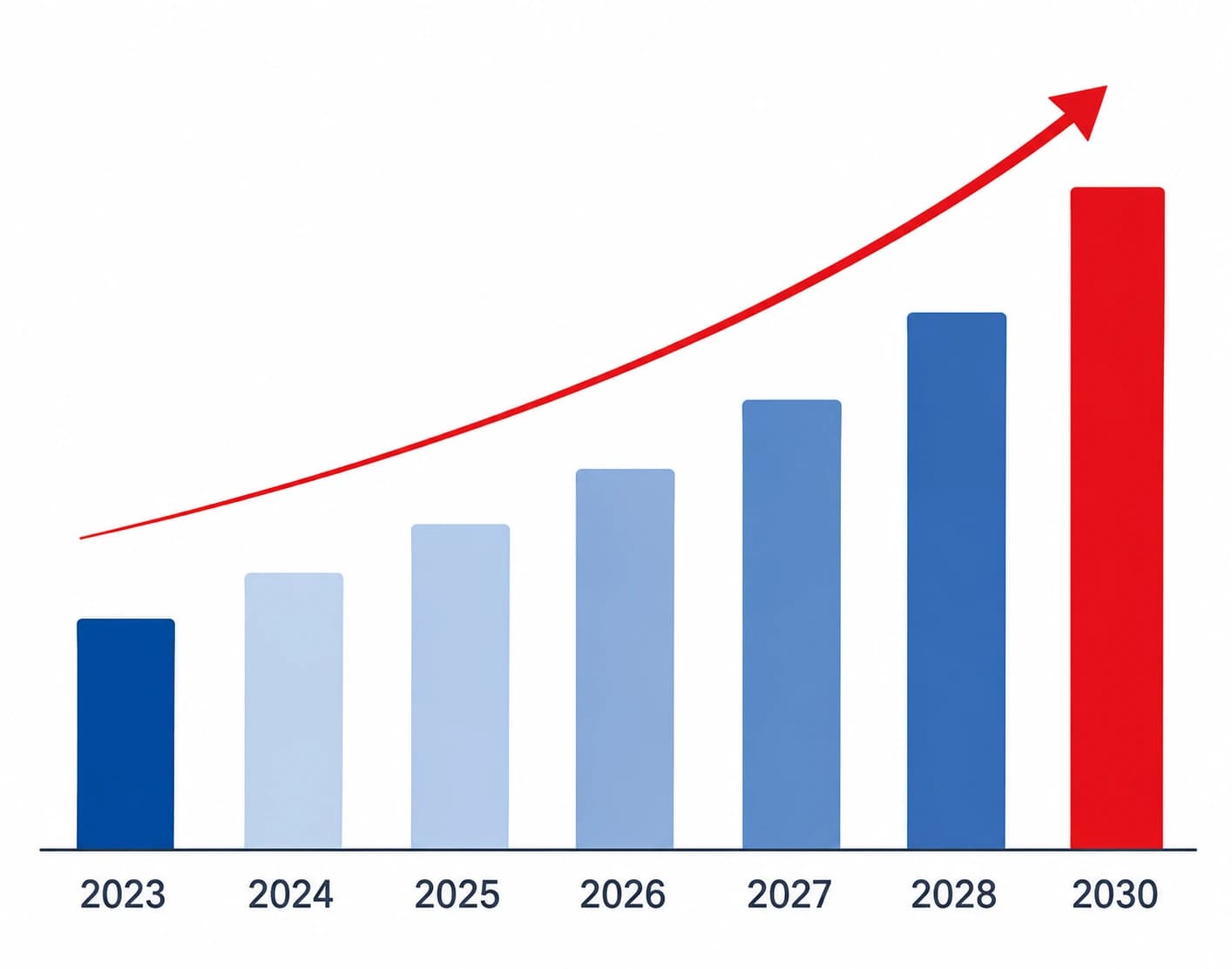
The global Low and Mid Energy Electron Beam (EB) Accelerators market was valued at US$ 104 million in 2024 and is anticipated to reach US$ 112 million by 2031, witnessing a CAGR of 1.0% during the forecast period 2025-2031.
The electron beam accelerator uses High Energy electrons as its radiation source. The High Energy electrons, generated by normal currents, are accelerated through the accelerator to near the speed of light and the electrons are focused to a fixed scanning angle to form a scanning curtain of electrons in a sweeping pattern. Finally, the speed of transmission of the product through the scanning curtain is precisely controlled.
Electron beam (EB) accelerators are a staple of industrial equipment used in many commercial radiation processing applications. EB accelerators are commonly used in various industrial, scientific, and medical applications due to their ability to produce High Energy electron beams. It was used in diverse industries to enhance the physical and chemical properties of materials and to reduce undesirable contaminants.
Low Energy Electron Beam accelerators are available with energies of 0.1 MeV to 0.8 MeV. The accelerators are major used to cure pressure sensitive adhesives, paper, film, for printing, soft packaging and for coatings.
Medium Energy Electron Beam accelerators are available with energies of 0.8 MeV to 5 MeV. The main application areas of Medium Energy accelerators include radiation crosslinking of cables, radiation crosslinking of heat shrinkable materials, radiation modification of foaming materials for automotive interiors, radiation curing of wood-plastic materials, and radiation modification of semiconductors.
Efficient Polymer Curing: One of the main drivers for low and mid-energy EB accelerators is their effectiveness in polymer curing processes. They enable rapid and efficient curing of coatings, adhesives, and inks in industries like automotive, packaging, and electronics. Enhanced Material Properties: Low and mid-energy electron beams can modify surface properties and cross-link materials, leading to improved mechanical, thermal, and chemical properties of materials. This makes them attractive for industries seeking to enhance product performance. Initial Investment: Setting up low and mid-energy EB accelerator facilities requires a significant initial investment in terms of equipment, facility modifications, and safety measures. Material Compatibility: The effectiveness of low and mid-energy electron beams depends on material composition and characteristics. Certain materials may not respond well to electron beam treatment, limiting their applicability.
This report aims to provide a comprehensive presentation of the global market for Low and Mid Energy Electron Beam (EB) Accelerators, with both quantitative and qualitative analysis, to help readers develop business/growth strategies, assess the market competitive situation, analyze their position in the current marketplace, and make informed business decisions regarding Low and Mid Energy Electron Beam (EB) Accelerators.
The Low and Mid Energy Electron Beam (EB) Accelerators market size, estimations, and forecasts are provided in terms of sales quantity (Units) and revenue ($ millions), considering 2024 as the base year, with history and forecast data for the period from 2020 to 2031. This report segments the global Low and Mid Energy Electron Beam (EB) Accelerators market comprehensively. Regional market sizes, concerning products by Type, by Application, and by players, are also provided.
For a more in-depth understanding of the market, the report provides profiles of the competitive landscape, key competitors, and their respective market ranks. The report also discusses technological trends and new product developments.
The report will help the Low and Mid Energy Electron Beam (EB) Accelerators manufacturers, new entrants, and industry chain related companies in this market with information on the revenues, sales, and average price for the overall market and the sub-segments across the different segments, by company, by Type, by Application, and by regions.
Chapter 1: Introduces the report scope of the report, executive summary of different market segments (by region, product type, application, etc), including the market size of each market segment, future development potential, and so on. It offers a high-level view of the current state of the market and its likely evolution in the short to mid-term, and long term.
Chapter 2: key insights, key emerging trends, etc.
Chapter 3: Manufacturers competitive analysis, detailed analysis of Low and Mid Energy Electron Beam (EB) Accelerators manufacturers competitive landscape, price, sales and revenue market share, latest development plan, merger, and acquisition information, etc.
Chapter 4: Provides profiles of key players, introducing the basic situation of the main companies in the market in detail, including product sales, revenue, price, gross margin, product introduction, recent development, etc.
Chapter 5 & 6: Sales, revenue of Low and Mid Energy Electron Beam (EB) Accelerators in regional level and country level. It provides a quantitative analysis of the market size and development potential of each region and its main countries and introduces the market development, future development prospects, market space, and market size of each country in the world.
Chapter 7: Provides the analysis of various market segments by Type, covering the market size and development potential of each market segment, to help readers find the blue ocean market in different market segments.
Chapter 8: Provides the analysis of various market segments by Application, covering the market size and development potential of each market segment, to help readers find the blue ocean market in different downstream markets.
Chapter 9: Analysis of industrial chain, including the upstream and downstream of the industry.
Chapter 10: The main points and conclusions of the report.
- ★ What Is The Overall Market Size And Projected Growth Rate Across Global And Regional Segments?
- ★ How Does The Market Size And Growth Outlook Vary Across Major Countries?
- ★ Which Region Or Market Sub-Segment Is Anticipated To Dominate Growth During The Forecast Period?
- ★ What Are The Primary Factors Expected To Drive Market Expansion, And What Challenges May Restrain Growth?
- ★ Which Emerging Technologies And Market Trends Are Shaping The Future Landscape?
- ★ What Are The Most Significant Opportunities Available In The Market?
- ★ Who Are The Leading Manufacturers Actively Participating In The Global Market?
- ★ Which Company Currently Holds The Largest Share Of The Market?
- ★ What Are The Potential Growth Avenues For New Entrants In The Global Market?