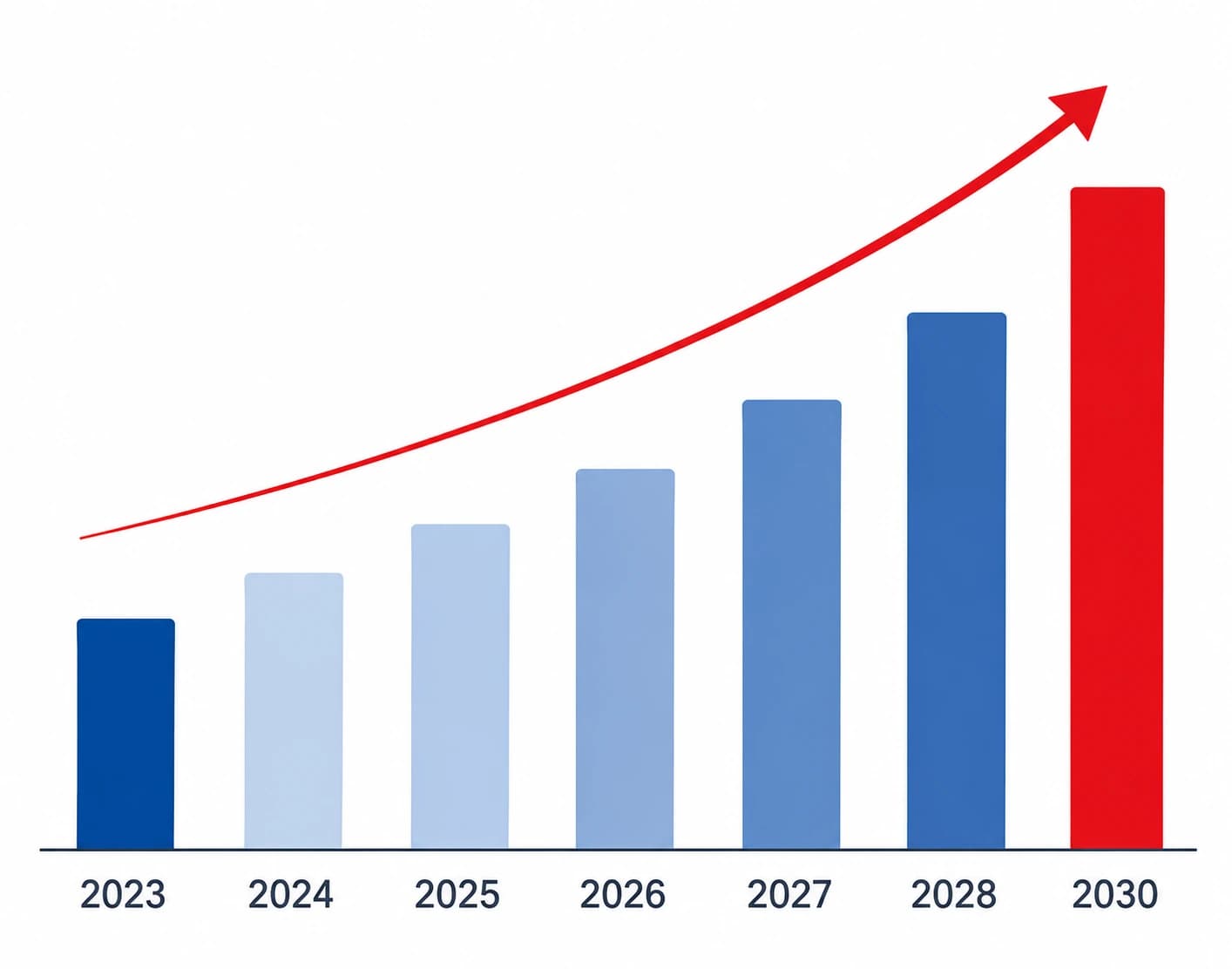
The global Digital Servo Press market was valued at US$ 266 million in 2025 and is anticipated to reach US$ 385 million by 2032, witnessing a CAGR of 5.5% during the forecast period 2026-2032.
In 2024, global Digital Servo Press production capacity is 20,000 units, with production reached approximately 14,300 units, with an average global market price of around US$ 17,000 per unit. The market gross margin is mainly 30%-40%.
Digital Servo Presses are a new type of precision pressing equipment that uses servo motors as the core drive, force-position-speed multi-closed-loop control as the foundation, and possesses the capability for full-process pressing data acquisition and intelligent quality monitoring. Its essential characteristic lies in replacing traditional hydraulic, pneumatic, and mechanical crank mechanisms with "controllable force curves + controllable displacement paths + full-process digital monitoring," transforming the pressing process from experience-driven to a traceable and verifiable digital process control system. The equipment typically consists of a servo motor, ball screw or toggle/direct drive mechanism, force/displacement sensors, a controller, and a vision or MES data interface. It can provide real-time feedback and compensation within a 1 ms cycle, achieving pressing repeatability accuracy at the micron level or higher. In industries such as automotive new energy, consumer electronics, motor manufacturing, precision medical devices, connectors, and battery pack assembly, Digital Servo Presses have become core equipment for achieving precision pressing, quality judgment (OK/NG), mistake-proofing, and process traceability. As the manufacturing industry moves towards zero defects, lightweight design, high-variety, low-volume production, and end-to-end digitalization, Digital Servo Presses are gradually replacing traditional presses and becoming the standard configuration for intelligent assembly lines.
The Digital Servo Press industry chain comprises three main segments: upstream core component suppliers, midstream OEM and control system manufacturers, and downstream application manufacturing companies. The upstream segment mainly includes suppliers of servo motors, ball screws/direct drive mechanisms, precision force/displacement sensors, servo drives, controllers, frame castings, and motion control algorithms. Servo systems and sensors represent the highest technological barriers. The midstream segment consists of press manufacturers, automation integrators, and software platform providers, undertaking tasks such as motor matching, structural design, mechanical compensation, curve monitoring, quality assessment, interface communication (e.g., OPC-UA/MES), press program management, and line commissioning services—a core link in the value chain. Downstream customers cover automotive (engines, chassis, steering, motor stators/rotors), new energy vehicles (electric drives, battery packs, connectors), electronics (mobile phones, precision components), home appliances, electric motors, medical devices, aerospace components, and precision assembly laboratories. With the intelligent upgrading of production lines, most downstream customers no longer purchase individual machines, but instead turn to complete solutions of "full line automation + servo pressing unit + quality traceability platform", which has led to a rapid increase in the value share of midstream integrators and software providers.
The global digital servo press market is experiencing rapid expansion, driven by a combination of factors: increased demand for precision assembly, upgrades in smart manufacturing, and the trend of hydraulic/pneumatic replacement. Firstly, in the automotive and new energy vehicle sectors, processes such as stator/rotor press-fitting, battery module crimping, and connector insertion force determination place significantly higher demands on force-position curve consistency, driving the rapid replacement of traditional hydraulic equipment by servo presses. Secondly, the consumer electronics, small motor, and medical device industries continue to move towards miniaturization and high consistency, requiring equipment with micron-level position control and millinewton-level force control capabilities, creating new demand for high-precision servo presses. Thirdly, the global manufacturing industry's trends towards compliance, traceability, and automation have made press-fit data acquisition, curve recording, AI predictive quality assessment, and MES integration essential, driving the transformation of servo presses from "equipment" to "equipment + software + data services," thereby increasing their overall lifecycle value. Regionally, China is the fastest-growing market due to the expansion of new energy and electronics manufacturing; Europe, the US, and Japan maintain their leadership in high-end press-fitting processes. Overall, over the next 5–10 years, Digital Servo Press will maintain high growth momentum, with its market share continuing to increase and gradually becoming a basic piece of equipment for smart assembly lines.
This report aims to provide a comprehensive presentation of the global market for Digital Servo Press, with both quantitative and qualitative analysis, to help readers develop business/growth strategies, assess the market competitive situation, analyze their position in the current marketplace, and make informed business decisions regarding Digital Servo Press.
The Digital Servo Press market size, estimations, and forecasts are provided in terms of sales quantity (Units) and revenue ($ millions), considering 2025 as the base year, with history and forecast data for the period from 2021 to 2032. This report segments the global Digital Servo Press market comprehensively. Regional market sizes, concerning products by Type, by Application, and by players, are also provided.
For a more in-depth understanding of the market, the report provides profiles of the competitive landscape, key competitors, and their respective market ranks. The report also discusses technological trends and new product developments.
The report will help the Digital Servo Press manufacturers, new entrants, and industry chain related companies in this market with information on the revenues, sales, and average price for the overall market and the sub-segments across the different segments, by company, by Type, by Application, and by regions.
Chapter 1: Introduces the report scope of the report, executive summary of different market segments (by region, product type, application, etc), including the market size of each market segment, future development potential, and so on. It offers a high-level view of the current state of the market and its likely evolution in the short to mid-term, and long term.
Chapter 2: key insights, key emerging trends, etc.
Chapter 3: Manufacturers competitive analysis, detailed analysis of Digital Servo Press manufacturers competitive landscape, price, sales and revenue market share, latest development plan, merger, and acquisition information, etc.
Chapter 4: Provides profiles of key players, introducing the basic situation of the main companies in the market in detail, including product sales, revenue, price, gross margin, product introduction, recent development, etc.
Chapter 5 & 6: Sales, revenue of Digital Servo Press in regional level and country level. It provides a quantitative analysis of the market size and development potential of each region and its main countries and introduces the market development, future development prospects, market space, and market size of each country in the world.
Chapter 7: Provides the analysis of various market segments by Type, covering the market size and development potential of each market segment, to help readers find the blue ocean market in different market segments.
Chapter 8: Provides the analysis of various market segments by Application, covering the market size and development potential of each market segment, to help readers find the blue ocean market in different downstream markets.
Chapter 9: Analysis of industrial chain, including the upstream and downstream of the industry.
Chapter 10: The main points and conclusions of the report.
- ★ What Is The Overall Market Size And Projected Growth Rate Across Global And Regional Segments?
- ★ How Does The Market Size And Growth Outlook Vary Across Major Countries?
- ★ Which Region Or Market Sub-Segment Is Anticipated To Dominate Growth During The Forecast Period?
- ★ What Are The Primary Factors Expected To Drive Market Expansion, And What Challenges May Restrain Growth?
- ★ Which Emerging Technologies And Market Trends Are Shaping The Future Landscape?
- ★ What Are The Most Significant Opportunities Available In The Market?
- ★ Who Are The Leading Manufacturers Actively Participating In The Global Market?
- ★ Which Company Currently Holds The Largest Share Of The Market?
- ★ What Are The Potential Growth Avenues For New Entrants In The Global Market?