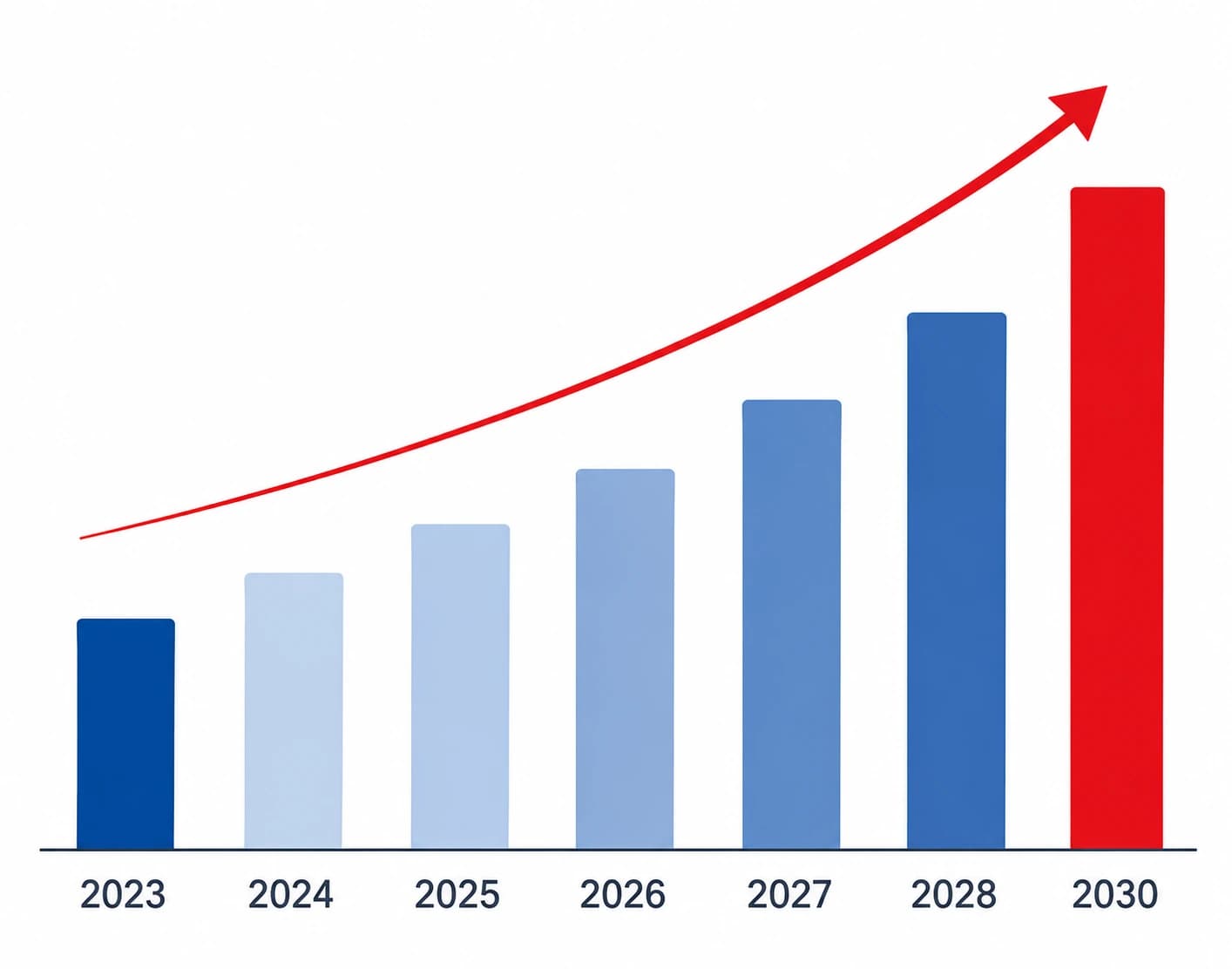
The global Commercial Water Filters market was valued at US$ 9845 million in 2025 and is anticipated to reach US$ 25540 million by 2032, witnessing a CAGR of 14.8% during the forecast period 2026-2032.
The global commercial water filter market is growing rapidly, with annual sales expected to rise from around 36 million units currently to about 76 million units by 2031, with a compound annual growth rate (CAGR) between 12% and 15%. As the demand for high-quality water increases in commercial sectors such as restaurants, hotels, office buildings, and industrial applications, the market for commercial water filters continues to expand, particularly in developing countries and emerging markets. The price range for commercial water filters generally falls between 200 to 400 USD per unit, with specific prices depending on filtration technology, processing capacity, and brand reputation. Lower-priced models are suitable for smaller commercial establishments, while high-end units cater to larger commercial needs, offering more efficient water treatment capabilities and additional multifunctional services.
A commercial water filter is a device designed to remove contaminants from water to ensure it meets the standards required for safe consumption, industrial use, or other commercial applications. Commercial water filters typically employ a combination of filtration and treatment technologies, such as reverse osmosis (RO), ultraviolet (UV) disinfection, activated carbon adsorption, and other advanced methods. These filters aim to effectively remove harmful substances from water, including bacteria, viruses, chemicals, heavy metals, and suspended particles, ensuring the water is safe and meets health standards. Commercial water filters are widely used across various industries, including hospitality, food and beverage production, healthcare, manufacturing, and more, where water quality standards are crucial.
As global water pollution continues to rise, the demand for commercial water filters has been growing rapidly. More commercial entities, factories, and hospitals are investing in advanced water treatment technologies to ensure that the water they provide meets strict sanitary and environmental standards. At the same time, as living standards improve and health awareness rises, commercial water filters are becoming an indispensable part of many public service sectors. With the continuous advancement of technology and growing emphasis on water resources, the commercial water filter market is expected to experience further growth in the future.
The commercial water filter market holds significant growth potential driven by several key factors. Firstly, the increasing global water pollution has forced industries to raise water quality standards, driving the demand for water filtration systems. Public institutions, commercial buildings, and industrial facilities all consider water quality as a crucial operational issue. Additionally, continuous advancements in technology offer more efficient and environmentally friendly solutions, such as improvements in reverse osmosis and UV disinfection technologies, making water filtration more precise and effective. Furthermore, stricter environmental regulations and health standards are driving market growth. Governments worldwide are enhancing their requirements for water resource management and environmental protection, further increasing the demand for commercial water filters. Additionally, rising health awareness among consumers is encouraging companies to invest in higher-quality water treatment systems to ensure the safety of both employees and customers.
Market Challenges, Risks, & Restraints
Despite the opportunities, the commercial water filter market faces several challenges. One major challenge is the high initial investment cost, especially for high-end systems, which could place a financial burden on small businesses. Additionally, the maintenance and replacement cycles of these systems pose concerns, as filters may experience reduced efficiency or malfunctions over time, leading to extra repair and downtime costs. Moreover, the diverse range of brands and technologies available in the market increases consumer choice complexity, with varying product quality, which may result in misguided purchasing decisions due to lack of expertise. Furthermore, the varying water quality across different regions of the world presents a challenge for commercial water filters to adapt globally, requiring tailored solutions based on regional water characteristics.
As the focus on water safety intensifies, the downstream demand for commercial water filters is diversifying. The hospitality and foodservice industries continue to raise their standards for drinking water, which drives the demand for high-end filtration systems. As consumers place more emphasis on healthy eating, the food and beverage sector also requires higher-quality water to ensure the safety of water used in production. Moreover, hospitals and healthcare facilities are demanding stricter water quality controls, especially in procedures such as surgeries and dialysis, where pure, contaminant-free water is essential. In addition, as industrial production scales up, manufacturing and heavy industries are requiring greater efficiency and higher water quality, expanding the applications of commercial water filters in these sectors.
This report aims to provide a comprehensive presentation of the global market for Commercial Water Filters, with both quantitative and qualitative analysis, to help readers develop business/growth strategies, assess the market competitive situation, analyze their position in the current marketplace, and make informed business decisions regarding Commercial Water Filters.
The Commercial Water Filters market size, estimations, and forecasts are provided in terms of sales quantity (K Units) and revenue ($ millions), considering 2025 as the base year, with history and forecast data for the period from 2021 to 2032. This report segments the global Commercial Water Filters market comprehensively. Regional market sizes, concerning products by Technology, by Application, and by players, are also provided.
For a more in-depth understanding of the market, the report provides profiles of the competitive landscape, key competitors, and their respective market ranks. The report also discusses technological trends and new product developments.
The report will help the Commercial Water Filters manufacturers, new entrants, and industry chain related companies in this market with information on the revenues, sales, and average price for the overall market and the sub-segments across the different segments, by company, by Technology, by Application, and by regions.
Chapter 1: Introduces the report scope of the report, executive summary of different market segments (by region, product type, application, etc), including the market size of each market segment, future development potential, and so on. It offers a high-level view of the current state of the market and its likely evolution in the short to mid-term, and long term.
Chapter 2: key insights, key emerging trends, etc.
Chapter 3: Manufacturers competitive analysis, detailed analysis of Commercial Water Filters manufacturers competitive landscape, price, sales and revenue market share, latest development plan, merger, and acquisition information, etc.
Chapter 4: Provides profiles of key players, introducing the basic situation of the main companies in the market in detail, including product sales, revenue, price, gross margin, product introduction, recent development, etc.
Chapter 5 & 6: Sales, revenue of Commercial Water Filters in regional level and country level. It provides a quantitative analysis of the market size and development potential of each region and its main countries and introduces the market development, future development prospects, market space, and market size of each country in the world.
Chapter 7: Provides the analysis of various market segments by Technology, covering the market size and development potential of each market segment, to help readers find the blue ocean market in different market segments.
Chapter 8: Provides the analysis of various market segments by Application, covering the market size and development potential of each market segment, to help readers find the blue ocean market in different downstream markets.
Chapter 9: Analysis of industrial chain, including the upstream and downstream of the industry.
Chapter 10: The main points and conclusions of the report.
- ★ What Is The Overall Market Size And Projected Growth Rate Across Global And Regional Segments?
- ★ How Does The Market Size And Growth Outlook Vary Across Major Countries?
- ★ Which Region Or Market Sub-Segment Is Anticipated To Dominate Growth During The Forecast Period?
- ★ What Are The Primary Factors Expected To Drive Market Expansion, And What Challenges May Restrain Growth?
- ★ Which Emerging Technologies And Market Trends Are Shaping The Future Landscape?
- ★ What Are The Most Significant Opportunities Available In The Market?
- ★ Who Are The Leading Manufacturers Actively Participating In The Global Market?
- ★ Which Company Currently Holds The Largest Share Of The Market?
- ★ What Are The Potential Growth Avenues For New Entrants In The Global Market?