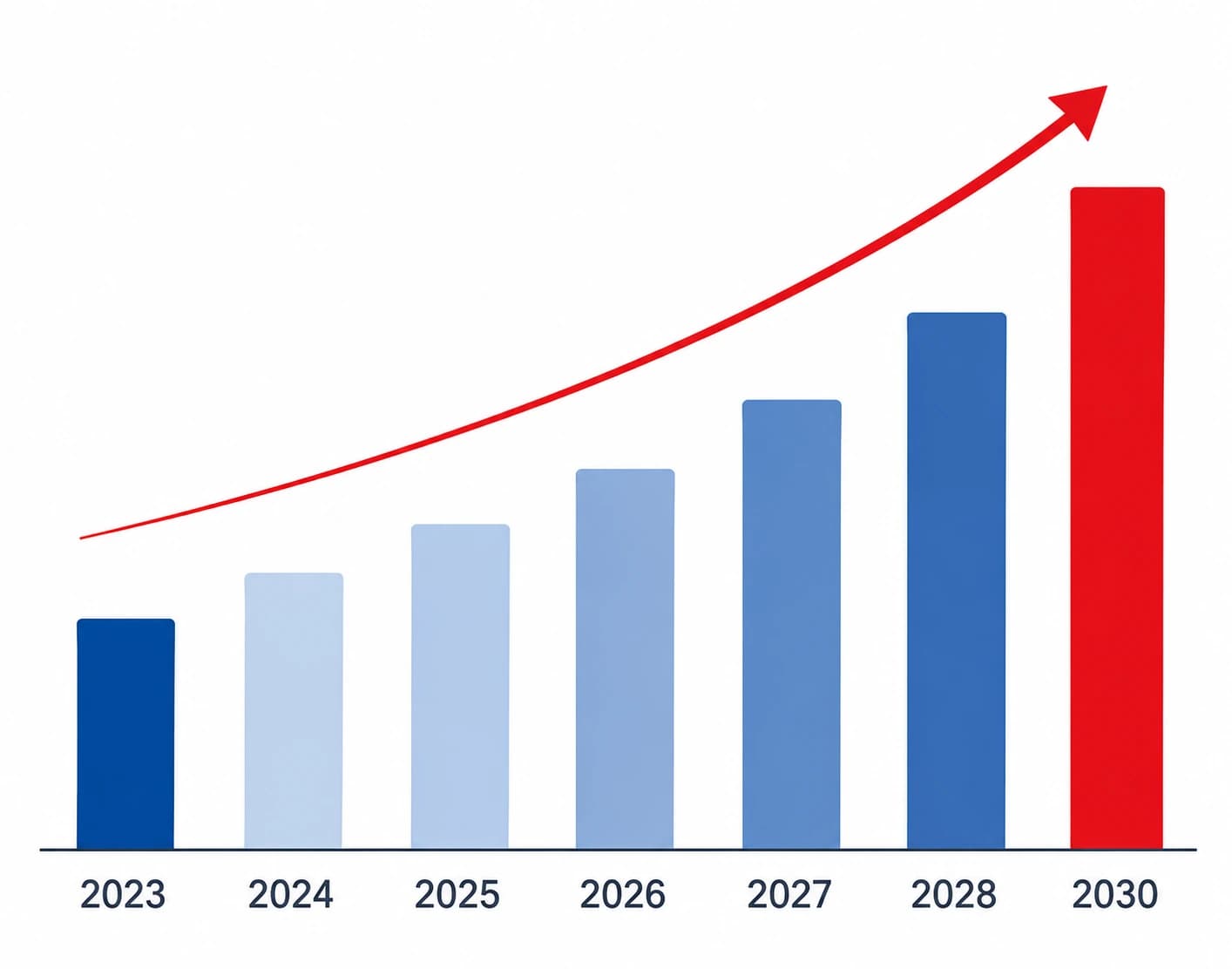
The global AI Medical Product market was valued at US$ 15589 million in 2025 and is anticipated to reach US$ 42394 million by 2032, witnessing a CAGR of 15.3% during the forecast period 2026-2032.
AI Medical Products refer to software-driven or software-centric medical solutions that apply artificial intelligence technologies—such as machine learning, deep learning, and advanced data analytics—to support clinical decision-making, diagnosis, treatment planning, and disease management. These products are typically commercialized as Software as a Medical Device (SaMD) or as AI-enabled medical systems integrated into existing clinical workflows. Core application areas include medical imaging analysis, digital pathology, clinical decision support, physiological signal analysis, and predictive risk modeling. Unlike general-purpose AI or healthcare IT systems, AI medical products must meet stringent regulatory, safety, and clinical validation requirements (e.g., FDA, CE, NMPA), and are designed to deliver measurable clinical value such as improved diagnostic accuracy, workflow efficiency, and patient outcomes.
From a segmentation perspective, the AI Medical Product market can be parameterized along multiple dimensions. By clinical application, products include AI medical imaging, AI pathology, AI cardiology and neurology analytics, AI ophthalmology, and AI clinical decision support. By data modality, the market spans imaging data, waveform and signal data, structured clinical data, unstructured medical text, and multimodal data fusion. Additional classification dimensions include regulatory status (regulated SaMD vs. research-use-only tools), deployment model (on-premise, cloud-based, hybrid), and customer type (hospitals, imaging centers, diagnostic labs, and healthcare networks). This multi-angle classification enables granular market sizing and competitive benchmarking.
The industry chain of AI medical products is composed of three main layers. Upstream includes data sources (medical images, electronic health records, biosignals), computing infrastructure, and algorithm development tools. Midstream players are AI medical product developers and OEMs that design, train, validate, and commercialize clinically approved AI solutions, often collaborating with hospitals for data access and validation. Downstream customers consist of healthcare providers, diagnostic service organizations, and increasingly payers and pharmaceutical companies that adopt AI products to enhance care delivery, operational efficiency, and real-world evidence generation.
In terms of profitability, AI medical products generally exhibit attractive gross margins compared with traditional medical devices. Software-focused AI products typically achieve gross margins in the range of approximately 60–80%, supported by scalable deployment and recurring licensing or subscription revenue models. However, margins can be impacted by high upfront R&D costs, regulatory compliance expenses, and ongoing clinical validation requirements. Key market trends include rapid expansion of AI medical imaging, increasing regulatory acceptance of AI-assisted diagnostics, growing demand for workflow-integrated and multimodal AI solutions, and rising adoption of AI medical products in emerging markets driven by physician shortages and healthcare digitization.
This report aims to provide a comprehensive presentation of the global market for AI Medical Product, with both quantitative and qualitative analysis, to help readers develop business/growth strategies, assess the market competitive situation, analyze their position in the current marketplace, and make informed business decisions regarding AI Medical Product.
The AI Medical Product market size, estimations, and forecasts are provided in terms of revenue ($ millions), considering 2025 as the base year, with history and forecast data for the period from 2021 to 2032. This report segments the global AI Medical Product market comprehensively. Regional market sizes, concerning products by Type, by Application, and by players, are also provided.
For a more in-depth understanding of the market, the report provides profiles of the competitive landscape, key competitors, and their respective market ranks. The report also discusses technological trends and new product developments.
The report will help the AI Medical Product manufacturers, new entrants, and industry chain related companies in this market with information on the revenues for the overall market and the sub-segments across the different segments, by company, by Type, by Application, and by regions.
Chapter 1: Introduces the report scope of the report, executive summary of different market segments (by region, product type, application, etc), including the market size of each market segment, future development potential, and so on. It offers a high-level view of the current state of the market and its likely evolution in the short to mid-term, and long term.
Chapter 2: key insights, key emerging trends, etc.
Chapter 3: Manufacturers competitive analysis, detailed analysis of AI Medical Product manufacturers competitive landscape, revenue market share, latest development plan, merger, and acquisition information, etc.
Chapter 4: Provides profiles of key players, introducing the basic situation of the main companies in the market in detail, including product revenue, gross margin, product introduction, recent development, etc.
Chapter 5 & 6: Revenue of AI Medical Product in regional level and country level. It provides a quantitative analysis of the market size and development potential of each region and its main countries and introduces the market development, future development prospects, market space, and market size of each country in the world.
Chapter 7: Provides the analysis of various market segments by Type, covering the market size and development potential of each market segment, to help readers find the blue ocean market in different market segments.
Chapter 8: Provides the analysis of various market segments by Application, covering the market size and development potential of each market segment, to help readers find the blue ocean market in different downstream markets.
Chapter 9: Analysis of industrial chain, including the upstream and downstream of the industry.
Chapter 10: The main points and conclusions of the report.
- ★ What Is The Overall Market Size And Projected Growth Rate Across Global And Regional Segments?
- ★ How Does The Market Size And Growth Outlook Vary Across Major Countries?
- ★ Which Region Or Market Sub-Segment Is Anticipated To Dominate Growth During The Forecast Period?
- ★ What Are The Primary Factors Expected To Drive Market Expansion, And What Challenges May Restrain Growth?
- ★ Which Emerging Technologies And Market Trends Are Shaping The Future Landscape?
- ★ What Are The Most Significant Opportunities Available In The Market?
- ★ Who Are The Leading Manufacturers Actively Participating In The Global Market?
- ★ Which Company Currently Holds The Largest Share Of The Market?
- ★ What Are The Potential Growth Avenues For New Entrants In The Global Market?