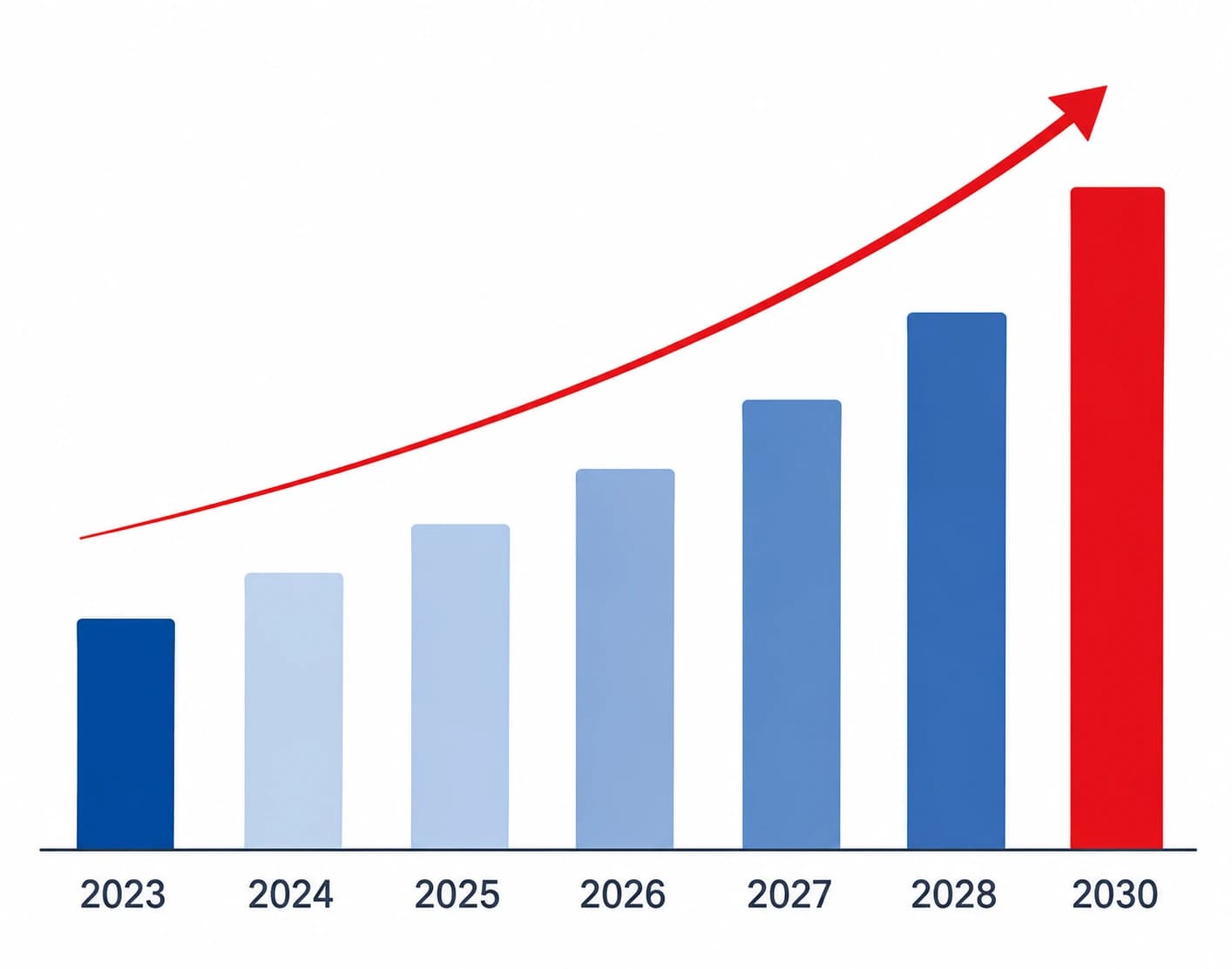
The global Sales Pipeline Management Software market was valued at US$ 6896 million in 2025 and is anticipated to reach US$ 12400 million by 2032, witnessing a CAGR of 8.8% during the forecast period 2026-2032.
Sales Pipeline Management Software is a category of sales application designed to systematically track, visualize, and manage sales opportunities as they progress through defined stages of the sales process, from initial lead qualification to deal closure (and in many cases renewal or expansion).
This sector is primarily software subscription-based, typically exhibiting a structure of "high gross margin, heavy sales expenses"—pure SaaS products usually have higher gross margins; however, if they involve significant local deployment, data migration, custom development, and on-site implementation, the increased proportion of project delivery will lower the gross margin. Overall: Standardized SaaS pipeline management gross margins are mostly between 70% and 85%; private/heavy delivery solutions commonly range from 60% to 75%; while for comprehensive solutions delivered as a "software + implementation service package," the gross margin depends more on delivery efficiency, template reuse rate, and channel revenue sharing structure.
The demand for sales channel/pipeline management software is shifting from "putting opportunities into the system" to "using the system to generate performance." On the one hand, companies are placing greater emphasis on cash flow and predictable growth amidst macroeconomic uncertainty: management needs more frequent and interpretable forecasts and bias attribution, driving pipeline data from "reporting" to "auditable operational dashboards." On the other hand, changes in organizational structure (remote/hybrid work, cross-regional sales, and channel partner collaboration) necessitate the online and standardized implementation of processes such as "lead allocation—follow-up SOP—stage review—quotation and contract—payment collection." Once these processes are solidified in the system, they significantly improve efficiency and reduce the onboarding costs for new employees. Simultaneously, AI and automation are upgrading "reminders/entry" to "next step suggestions, risk warnings, automatic allocation, and rhythm management," transforming pipeline management from a tool to an operational capability. Furthermore, the integration with systems such as email, telephone, meeting minutes, marketing automation, customer service tickets, and ERP/CPQ makes companies more willing to pay for "closed-loop efficiency from customer acquisition to sales," thereby continuously driving product penetration and increasing average order value.
This report aims to provide a comprehensive presentation of the global market for Sales Pipeline Management Software, with both quantitative and qualitative analysis, to help readers develop business/growth strategies, assess the market competitive situation, analyze their position in the current marketplace, and make informed business decisions regarding Sales Pipeline Management Software.
The Sales Pipeline Management Software market size, estimations, and forecasts are provided in terms of revenue ($ millions), considering 2025 as the base year, with history and forecast data for the period from 2021 to 2032. This report segments the global Sales Pipeline Management Software market comprehensively. Regional market sizes, concerning products by Type, by Application, and by players, are also provided.
For a more in-depth understanding of the market, the report provides profiles of the competitive landscape, key competitors, and their respective market ranks. The report also discusses technological trends and new product developments.
The report will help the Sales Pipeline Management Software manufacturers, new entrants, and industry chain related companies in this market with information on the revenues for the overall market and the sub-segments across the different segments, by company, by Type, by Application, and by regions.
Chapter 1: Introduces the report scope of the report, executive summary of different market segments (by region, product type, application, etc), including the market size of each market segment, future development potential, and so on. It offers a high-level view of the current state of the market and its likely evolution in the short to mid-term, and long term.
Chapter 2: key insights, key emerging trends, etc.
Chapter 3: Manufacturers competitive analysis, detailed analysis of Sales Pipeline Management Software manufacturers competitive landscape, revenue market share, latest development plan, merger, and acquisition information, etc.
Chapter 4: Provides profiles of key players, introducing the basic situation of the main companies in the market in detail, including product revenue, gross margin, product introduction, recent development, etc.
Chapter 5 & 6: Revenue of Sales Pipeline Management Software in regional level and country level. It provides a quantitative analysis of the market size and development potential of each region and its main countries and introduces the market development, future development prospects, market space, and market size of each country in the world.
Chapter 7: Provides the analysis of various market segments by Type, covering the market size and development potential of each market segment, to help readers find the blue ocean market in different market segments.
Chapter 8: Provides the analysis of various market segments by Application, covering the market size and development potential of each market segment, to help readers find the blue ocean market in different downstream markets.
Chapter 9: Analysis of industrial chain, including the upstream and downstream of the industry.
Chapter 10: The main points and conclusions of the report.
- ★ What Is The Overall Market Size And Projected Growth Rate Across Global And Regional Segments?
- ★ How Does The Market Size And Growth Outlook Vary Across Major Countries?
- ★ Which Region Or Market Sub-Segment Is Anticipated To Dominate Growth During The Forecast Period?
- ★ What Are The Primary Factors Expected To Drive Market Expansion, And What Challenges May Restrain Growth?
- ★ Which Emerging Technologies And Market Trends Are Shaping The Future Landscape?
- ★ What Are The Most Significant Opportunities Available In The Market?
- ★ Who Are The Leading Manufacturers Actively Participating In The Global Market?
- ★ Which Company Currently Holds The Largest Share Of The Market?
- ★ What Are The Potential Growth Avenues For New Entrants In The Global Market?