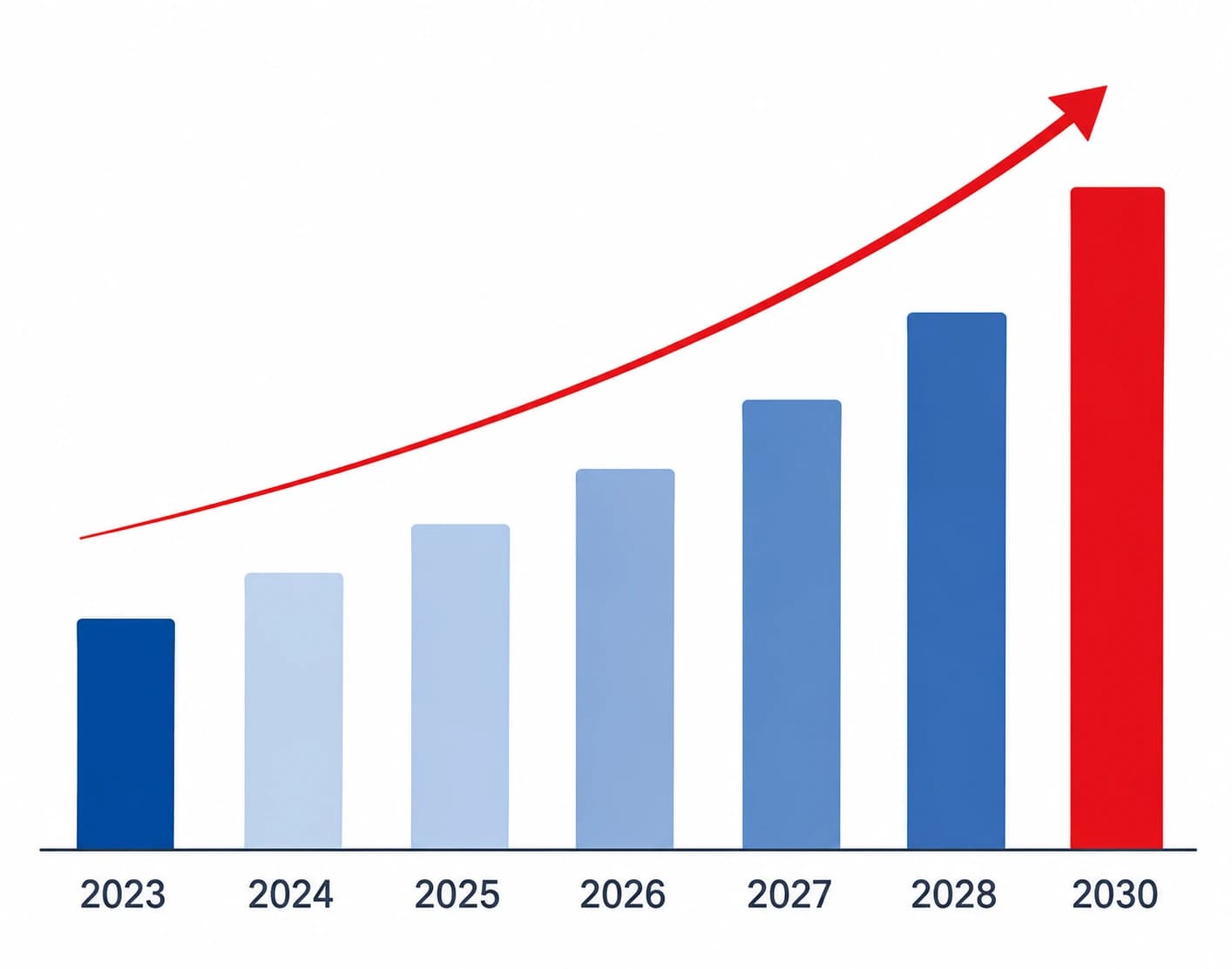
The global market for LEO Satellite Communication Payloads was estimated to be worth US$ 4034 million in 2025 and is projected to reach US$ 16314 million, growing at a CAGR of 21.0% from 2026 to 2032.
The potential shifts in the 2025 U.S. tariff framework pose substantial volatility risks to global markets. This report provides a comprehensive assessment of recent tariff adjustments and international strategic countermeasures on LEO Satellite Communication Payloads cross-border industrial footprints, capital allocation patterns, regional economic interdependencies, and supply chain reconfigurations.
In 2025, global shipments of LEO satellite communication payloads reached approximately 3,508 sets, with an estimated average selling price of around USD 1.15 million per set on a payload-equivalent basis. LEO satellite communication payloads are satellite-borne communication systems or subsystems installed on low Earth orbit communication satellites, designed to support signal reception, transmission, relay, beamforming, on-board processing, routing, switching, and link relay among satellites, user terminals, gateway stations, and other space nodes. These products mainly include complete communication payload systems, antenna payload subsystems, on-board processing payload subsystems, inter-satellite link communication payloads, and payload communication electronics units, serving applications such as LEO broadband access, direct mobile connectivity, satellite Internet of Things, government and defense communication networks, and space data relay.
From an industry development perspective, LEO satellite communication payloads are evolving from conventional onboard communication equipment into intelligent spaceborne network nodes. Traditional payloads mainly supported signal reception, amplification, frequency conversion, and relay functions, while next-generation LEO constellations increasingly require multi-beam phased arrays, onboard digital processing, regenerative baseband functions, inter-satellite links, and software-defined capabilities. With Starlink, Amazon Leo, Telesat Lightspeed, China’s Qianfan constellation, G60 Starlink, and direct-to-device satellite projects moving into large-scale deployment, both the value share and technical complexity of communication payloads are expected to increase. The global LEO satellite communication payloads market reached approximately USD 4.03 billion in 2025 and is expected to grow to around USD 5.21 billion in 2026, indicating a shift from pilot validation to mass manufacturing and constellation-scale deployment. The competitive landscape is likely to remain divided into two systems. The first group consists of vertically integrated constellation operators such as SpaceX, Amazon Leo, AST SpaceMobile, GalaxySpace, and Geespace, whose payloads are mainly developed for their own constellations. Their value is often reflected as internal installed value rather than external sales revenue. The second group includes external payload and subsystem suppliers such as MDA, Airbus Defence and Space, Thales Alenia Space, CesiumAstro, TESAT, CACI, Honeywell, Skyloom, L3Harris, Jushri Technologies, CICT Mobile, Chuangzhi Lianheng, and UbiNexus, whose business is more visible through contracts, deliveries, and project orders. Market sizing and company ranking should clearly separate captive in-house payload value from external supplier revenue to avoid distorted market share conclusions. In terms of product trends, the fastest-growing segments are expected to be beamforming antenna payloads and onboard processing payloads for LEO broadband and direct mobile connectivity, optical inter-satellite link payloads for low-latency constellation networking, and government and defense transport-layer payloads for secure and resilient communications. Compared with traditional satellite communication payloads, LEO payloads place greater emphasis on mass producibility, cost efficiency, reliability, software reconfigurability, and networked operations in orbit. As a result, engineering delivery capability will become as important as individual technical specifications. In China, LEO satellite communication payloads offer strong opportunities for domestic substitution and system-level industrial buildout. State-backed entities such as China Academy of Space Technology, Xi’an Branch of CAST, and Innovation Academy for Microsatellites are responsible for satellite system and payload development, while GalaxySpace, Shanghai Gesi Hangtian, and Geespace are advancing commercial LEO satellite manufacturing and constellation deployment. Jushri Technologies, CICT Mobile, Chuangzhi Lianheng, and UbiNexus are entering key areas such as spaceborne base stations, phased array payloads, LEO communication baseband, and onboard digital processing. In optical communication payloads, companies such as Laser Starcom, Histarlink, LaserLink, and Zhongke Tianta also deserve close monitoring. However, Chinese participants should be clearly separated into payload manufacturers, extended reserve suppliers, upstream component providers, and constellation operators to avoid mixing different value-chain positions.
This report provides a comprehensive view of the global market for LEO Satellite Communication Payloads, covering total sales volume, sales revenue, pricing, the market share and ranking of key companies, along with analyses by region & country, by Type, and by Application.
The LEO Satellite Communication Payloads market size, estimations, and forecasts are presented in terms of sales volume (Sets) and revenue ($ millions), with 2025 as the base year and historical and forecast data from 2021 to 2032. The report combines quantitative and qualitative analysis to help readers develop growth strategies, assess the competitive landscape, evaluate their position in the current marketplace, and make informed business decisions regarding LEO Satellite Communication Payloads.
Chapter 1: Introduces the scope of the report and the global market size (value, volume, and price). It also summarizes market dynamics and Recent Developments; identifies key drivers and restraints; outlines challenges and risks for manufacturers; reviews relevant industry policies and U.S. tariff implications.
Chapter 2: Provides a detailed analysis of the LEO Satellite Communication Payloads manufacturers' competitive landscape—including pricing, sales and revenue shares, Recent Developments plans, and mergers and acquisitions (M&A).
Chapter 3: Analyzes market segmentation by Type, presenting the size and growth potential of each segment to help readers identify blue-ocean opportunities.
Chapter 4: Analyzes market segmentation by Application, presenting the size and growth potential of each downstream segment to help readers identify blue-ocean opportunities.
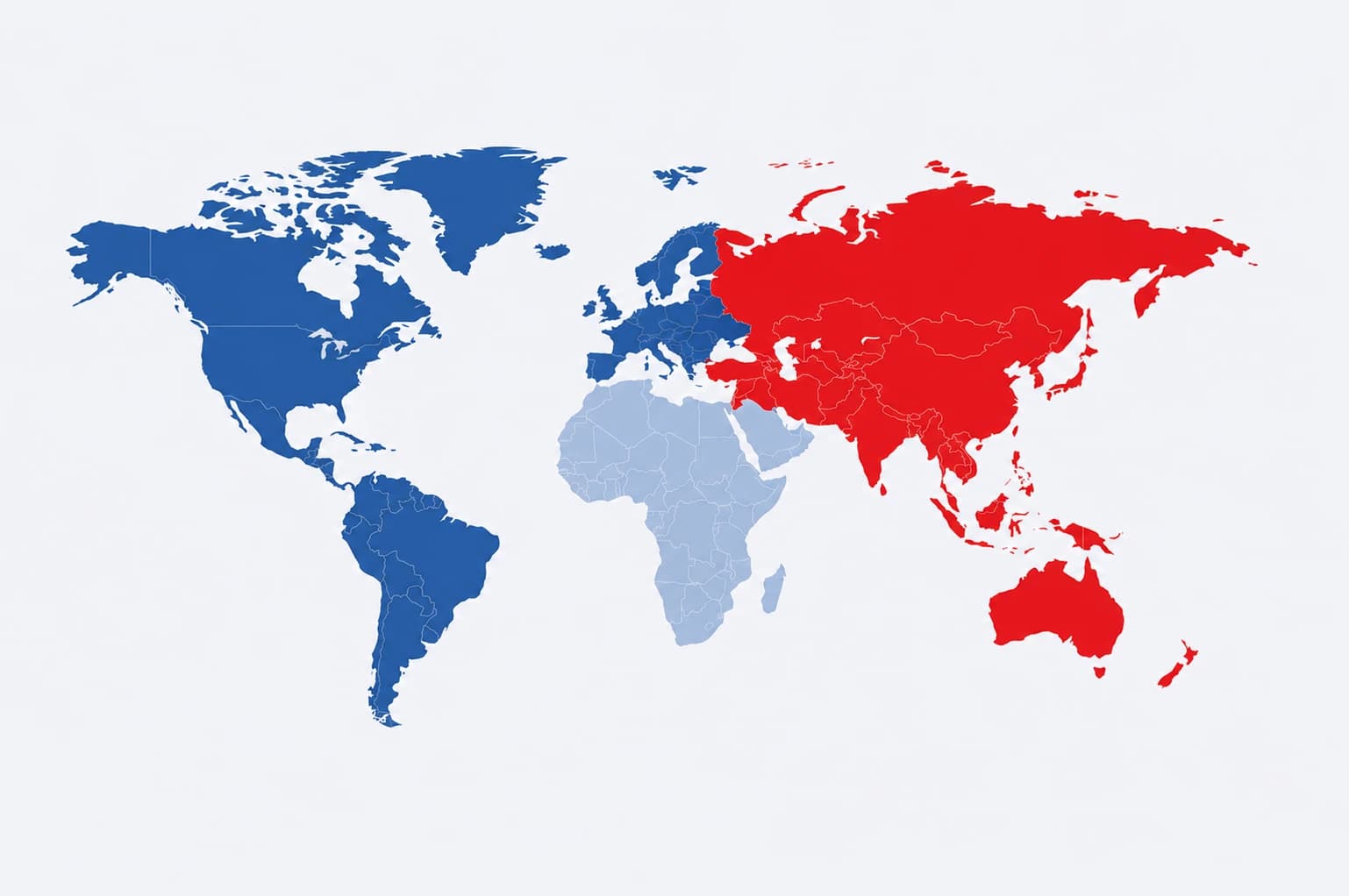
Chapter 5: Presents LEO Satellite Communication Payloads sales and revenue at the regional level. It offers a quantitative assessment of market size and growth potential by region and summarizes market development, future prospects, addressable space, and country-level market size worldwide.
Chapter 6: Presents LEO Satellite Communication Payloads sales and revenue at the country level. It provides segmented data by Type and by Application for each country/region.
Chapter 7: Profiles key players, detailing the main companies' product sales, revenue, pricing, gross margin, product portfolios, Recent Developments, etc.
Chapter 8: Analyzes the industry value chain, including upstream suppliers and downstream applications/customers.
- ★ What Is The Overall Market Size And Projected Growth Rate Across Global And Regional Segments?
- ★ How Does The Market Size And Growth Outlook Vary Across Major Countries?
- ★ Which Region Or Market Sub-Segment Is Anticipated To Dominate Growth During The Forecast Period?
- ★ What Are The Primary Factors Expected To Drive Market Expansion, And What Challenges May Restrain Growth?
- ★ Which Emerging Technologies And Market Trends Are Shaping The Future Landscape?
- ★ What Are The Most Significant Opportunities Available In The Market?
- ★ Who Are The Leading Manufacturers Actively Participating In The Global Market?
- ★ Which Company Currently Holds The Largest Share Of The Market?
- ★ What Are The Potential Growth Avenues For New Entrants In The Global Market?